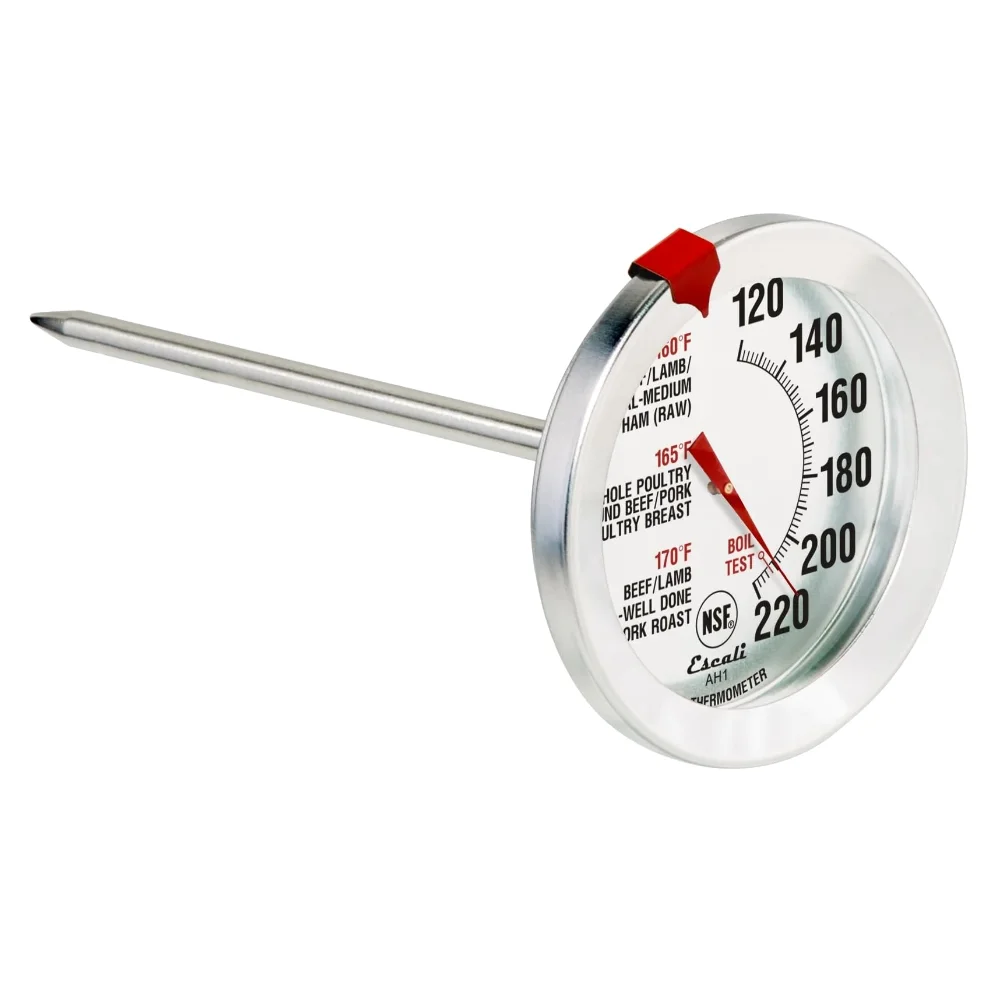
Analog dial thermometers
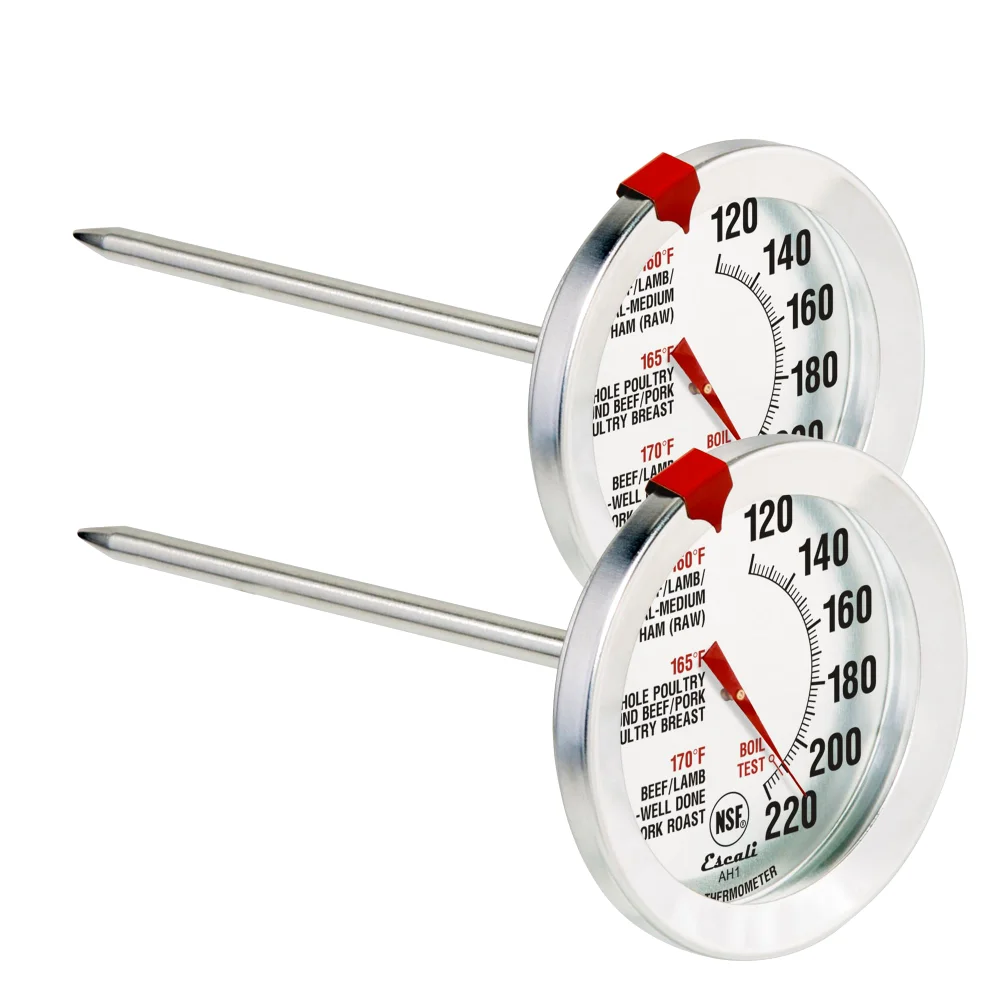
AH1 Oven-Safe Meat Thermometer, Silver
- 2.5 in dial
- Stainless steel
- Colour: Silver
4.3 · 5,874 ratings
$9.95
01The numbers a kitchen runs on
A hamburger that looks fully cooked is, one time in four, not cooked through. The federal food-safety service is blunt about it: colour proves nothing, and the only way to know is to measure. That single fact is the reason most of this catalog exists, and Escali has been building the instruments that do the measuring since 1999.
Every Escali card prints the capacity, the resolution or the probe length beside the price, so you can match the instrument to your counter before you decide rather than after the parcel arrives.
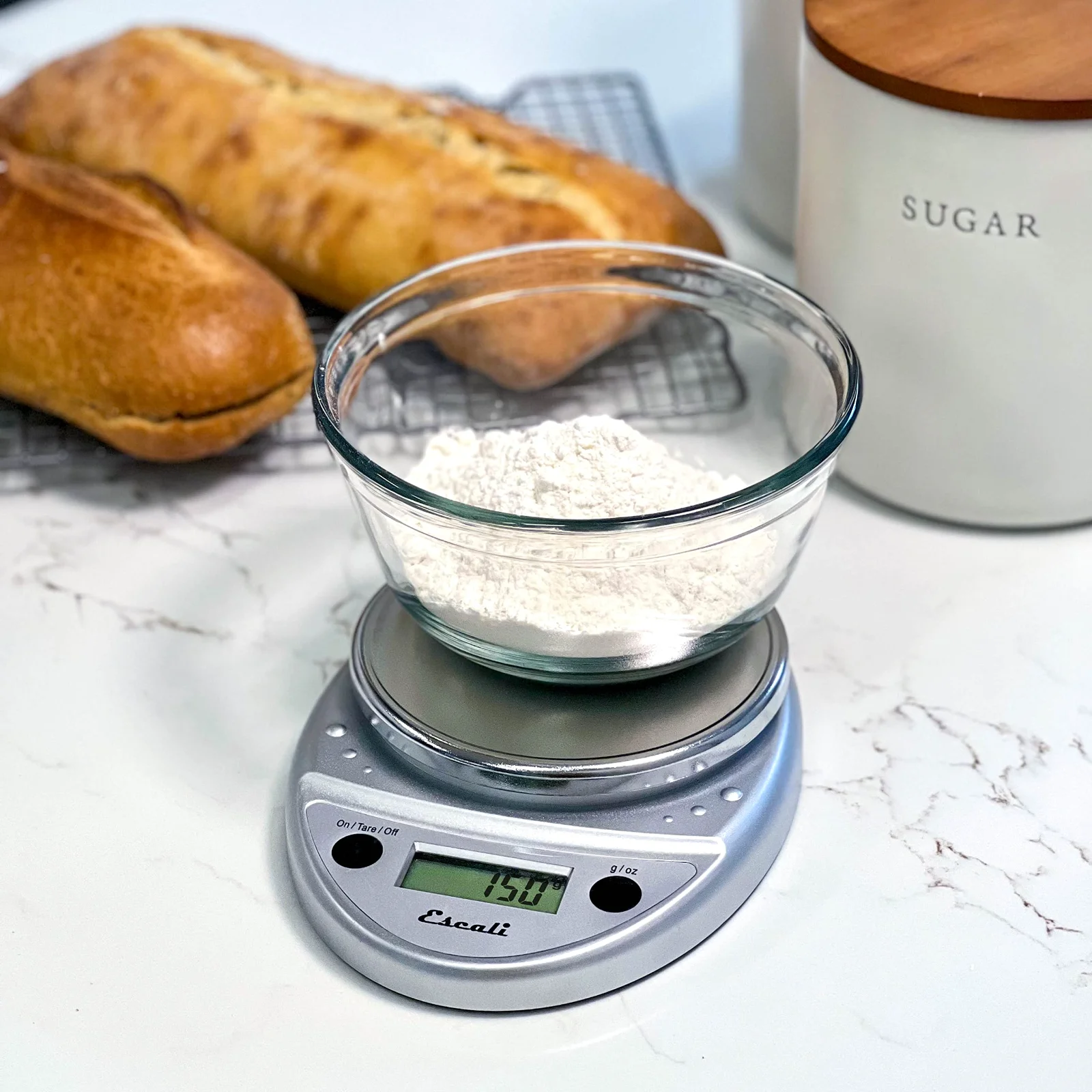
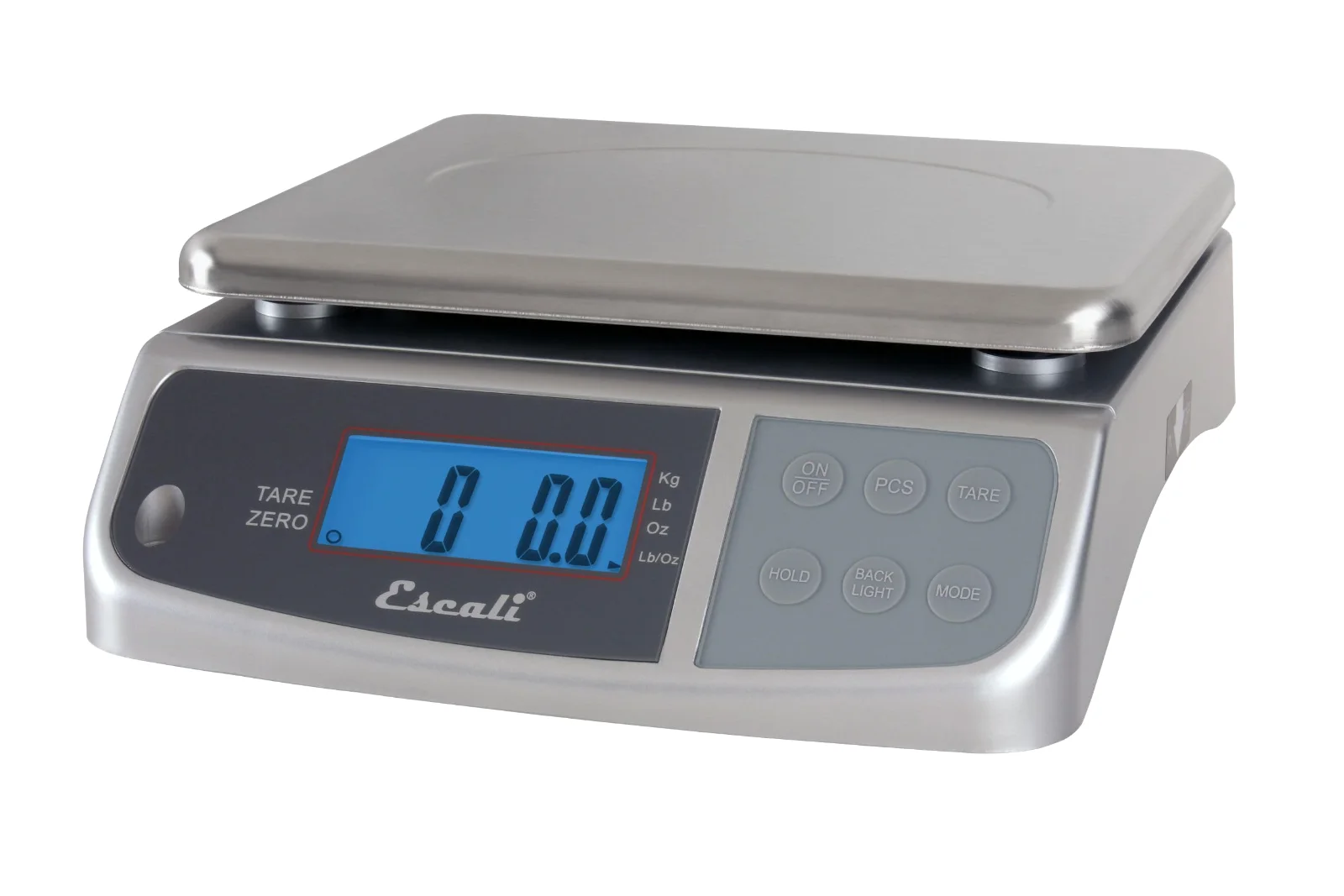
Primo Digital Food Scale, Chrome8.5x6 in platform · $25.00
02Start with the question
How much does it weigh, how hot is it, how long has it been, what do you weigh, and can the reading be proven. Each of those is its own shelf here, and the instrument you need follows from the question you are actually asking.
Five shelves, one discipline, and every instrument on all of them belongs to the Escali selection.
03What sells fastest
Ranked on the size of the rating pool behind each product family, not on what we would like to move. If a scale has held its zero on tens of thousands of counters, that is worth more than any adjective we could put next to it.
Analog dial thermometers
4.3 · 5,874 ratings
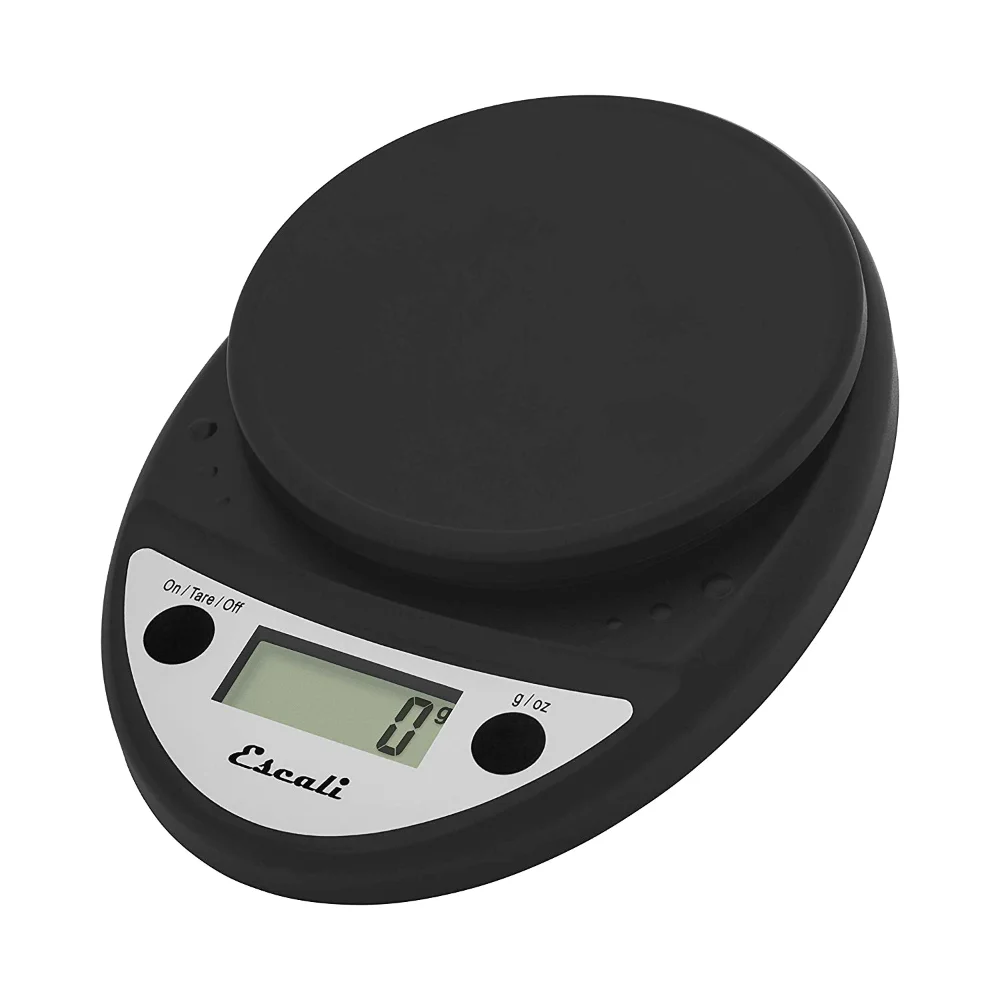
Primo food scales
4.7 · 2,553 ratings
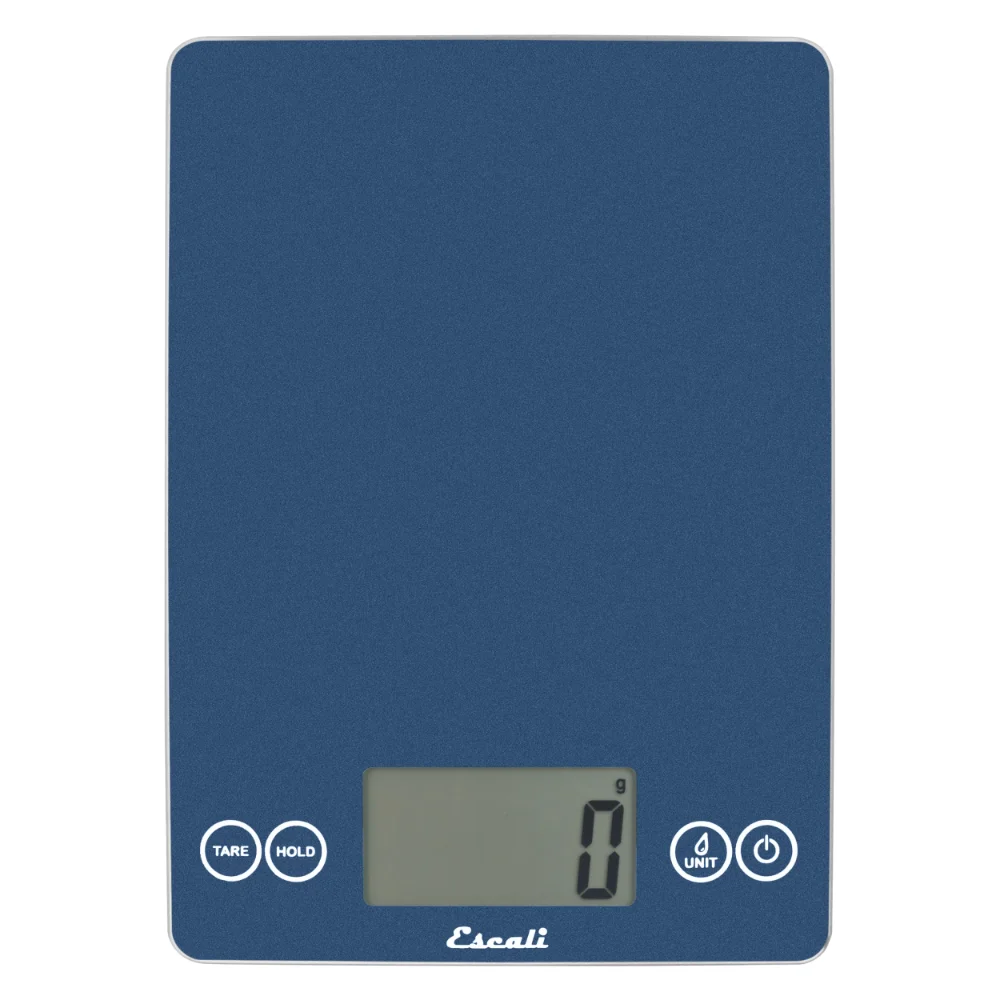
Arti glass scales
4.3 · 1,564 ratings
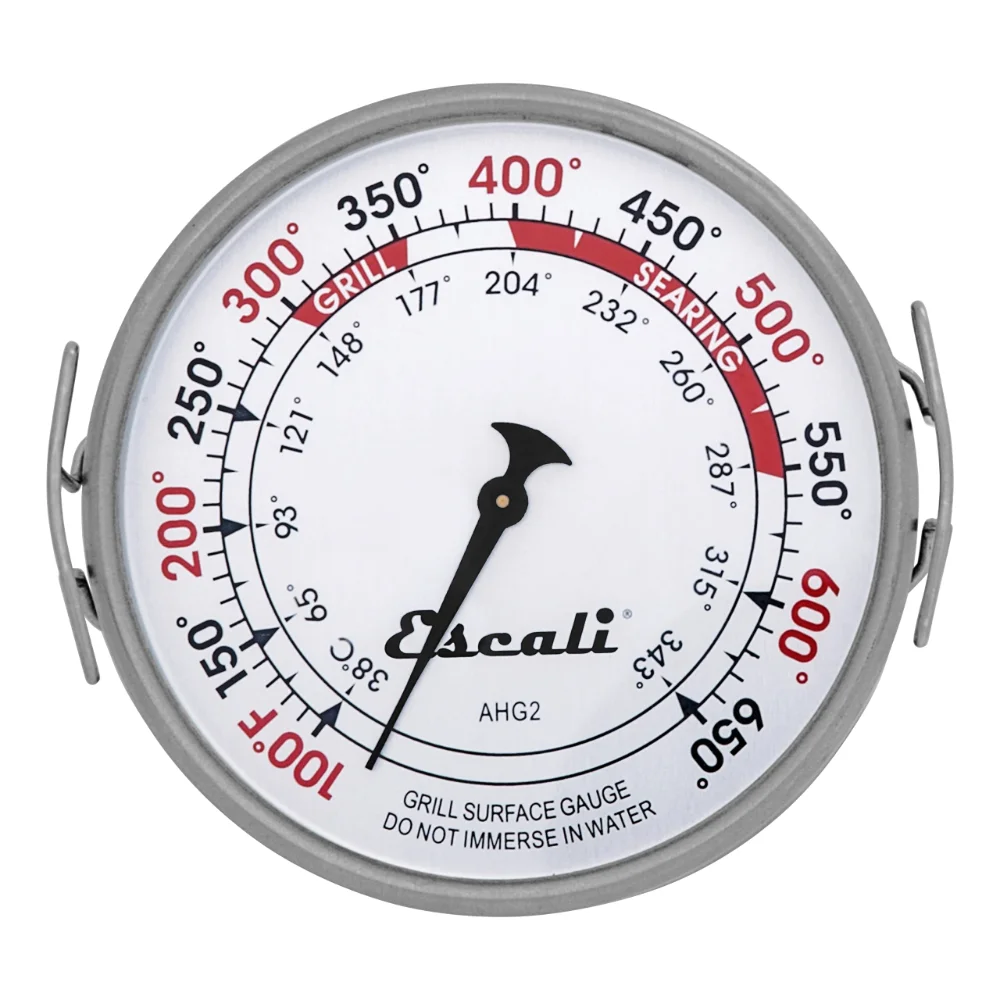
Grill & oven thermometers
4.2 · 1,409 ratings
04How the brand got here
Escali started in 1999 with a kitchen scale and a plain observation: American recipes ran on cups and glances while the rest of the cooking world ran on grams and degrees.
The first Escali scales did the unfashionable thing: they put a clear number where a guess used to be. A cup of flour weighs whatever the scoop and the settling decide that day; two hundred and fifty grams weighs two hundred and fifty grams. That is still the order everything here is designed in. The display you read is the face of the instrument; the load cell under the platform is what the instrument actually is.
The catalog widened one question at a time. Weight came first: the Primo, still on this front page, then glass platforms, a bowl scale, a mechanical dial for people who want no battery in the room. Temperature followed, because doneness is the same problem as weight wearing an apron: a number pretending to be a look. Timers came after that, and the bathroom scales apply the same load-cell discipline to a different floor. The pro bench -- lab balances reading to a hundredth of a gram, platforms rated to 330 pounds -- is the same idea with the tolerances tightened.
What that means in practice is unglamorous. A platform has to return to zero after ten thousand tare presses. A probe has to read a roast in seconds without minding the oven around it. A dial has to be legible across a kitchen through steam. None of those are breakthroughs; they are the parts of the job everybody skips, and they are why an instrument this simple earns a second decade on the same counter.
Today the range runs from a nine-dollar dial thermometer to a shipping platform, and one test stands behind all of it: put the thing you think you know on the instrument, and see whether the number agrees.
A thermometer only reports; the safe targets come from the federal food-safety agencies, and the body-composition figures on a smart scale are estimates, not diagnoses. Where a number on this site leans on an outside authority, that authority is named, with the date we read it, on our updates page.
05The weight of the recipe
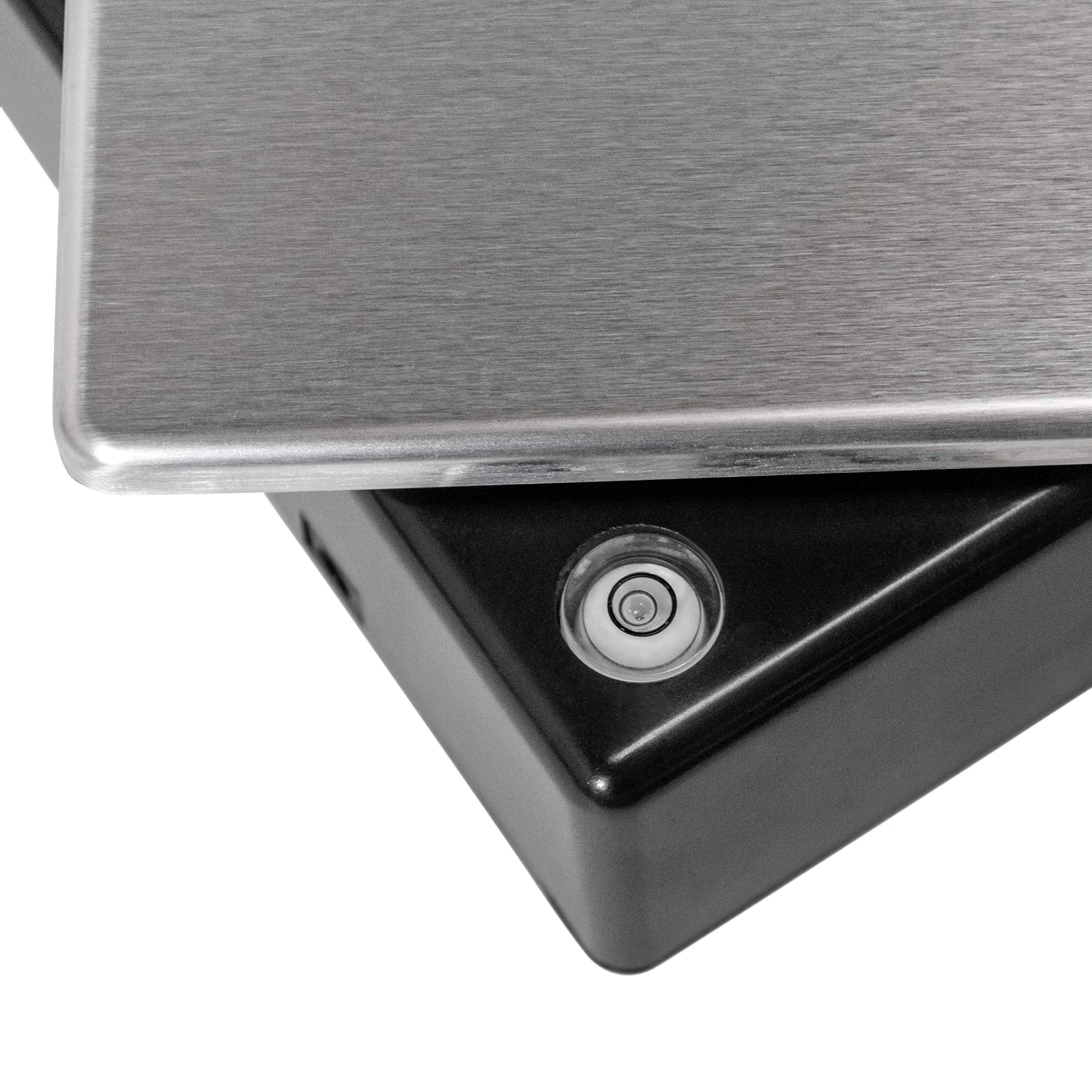
Grams settle what cups argue about, and every card here prints the capacity and the resolution, because those two figures decide which scale belongs on your counter.
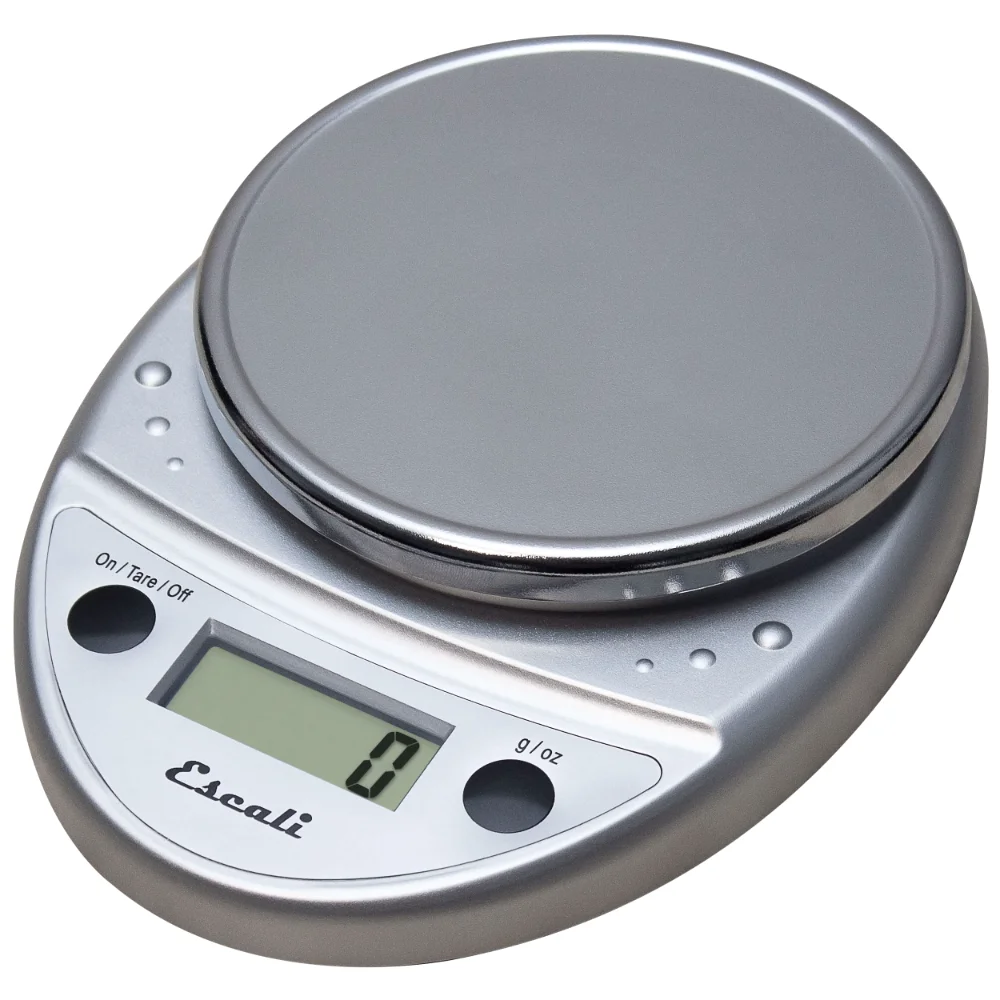
Primo food scales
4.7 · 2,553 ratings
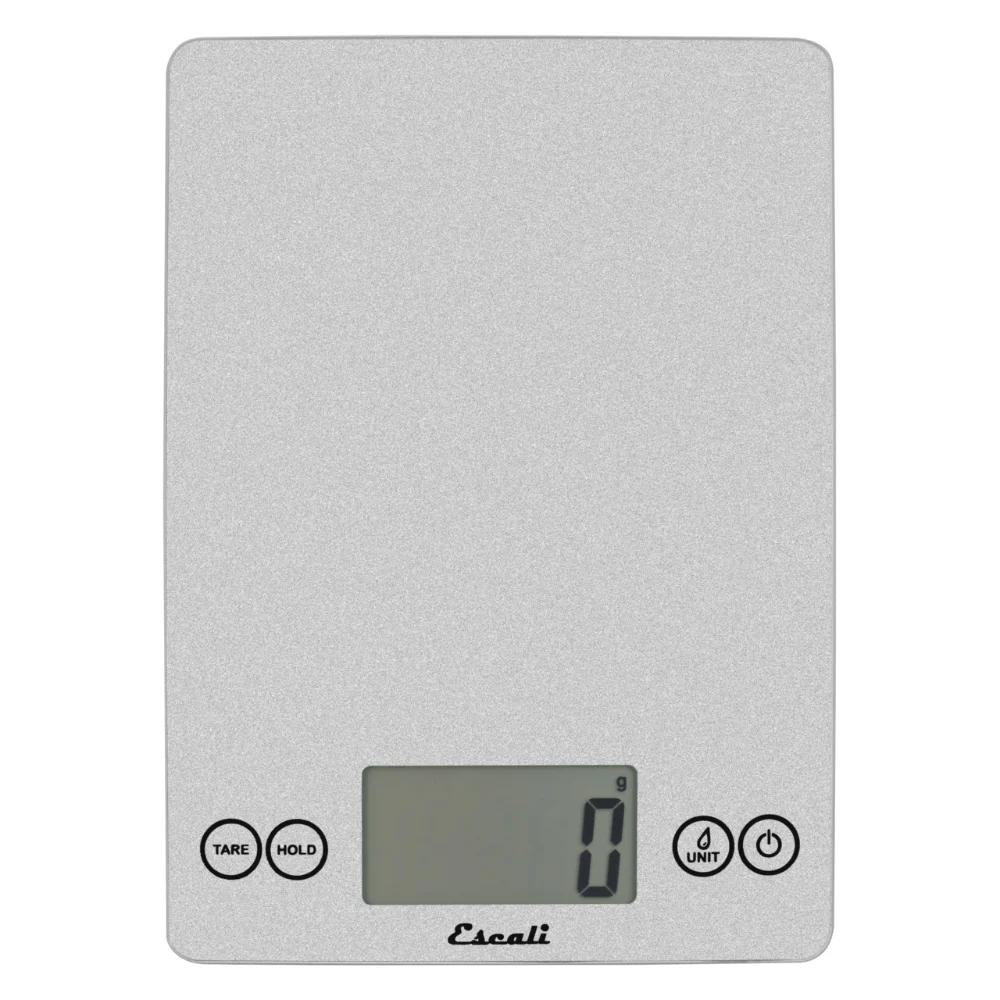
Arti glass scales
4.3 · 1,564 ratings
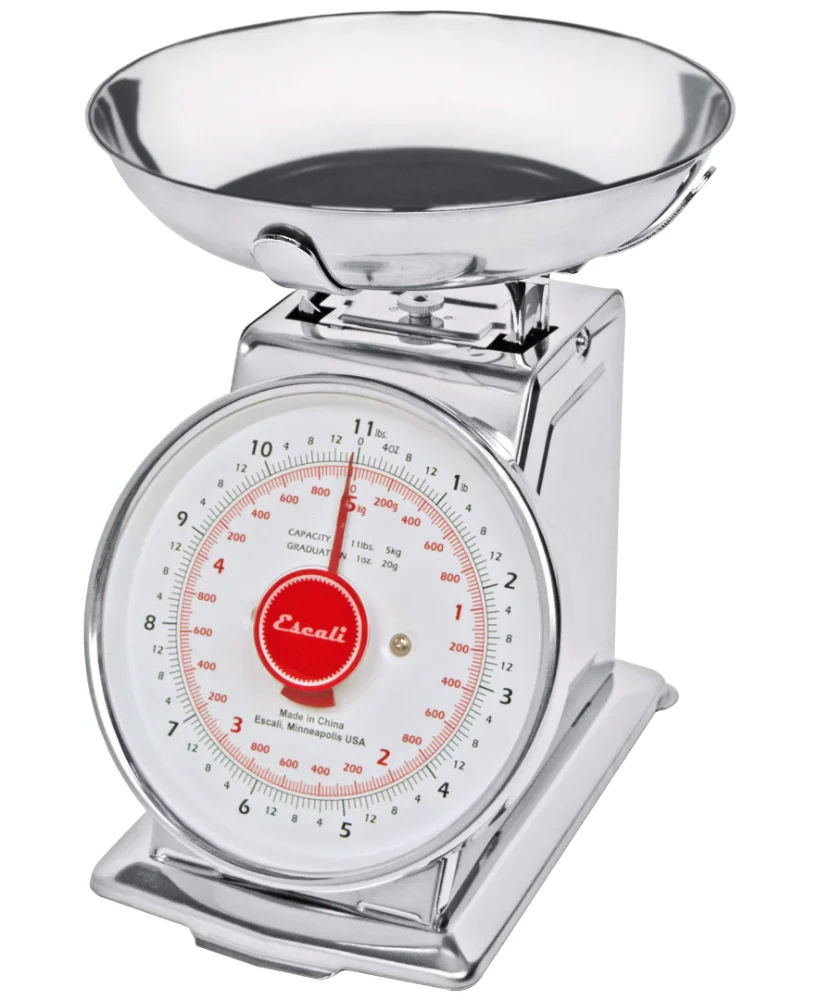
Bowl & volume scales
4.4 · 416 ratings
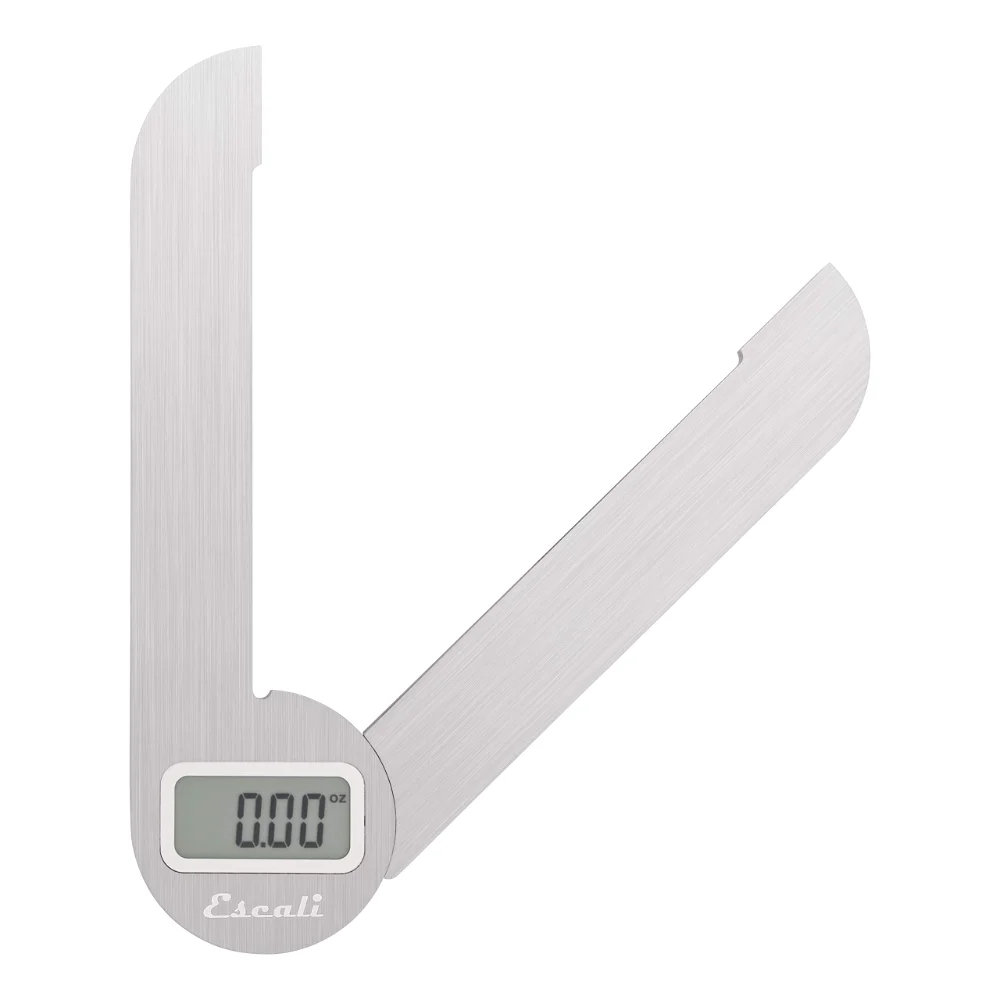
Compact kitchen scales
4.3 · 403 ratings
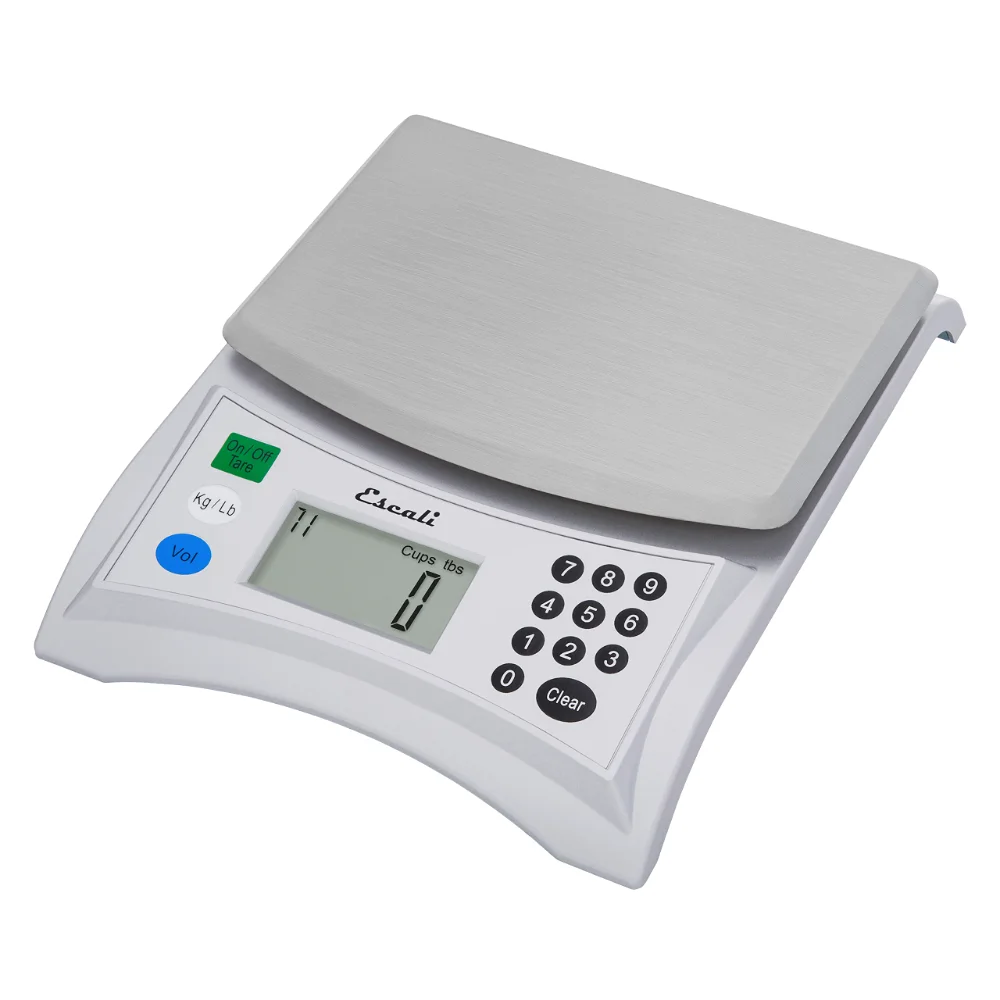
Bowl & volume scales
4.3 · 293 ratings
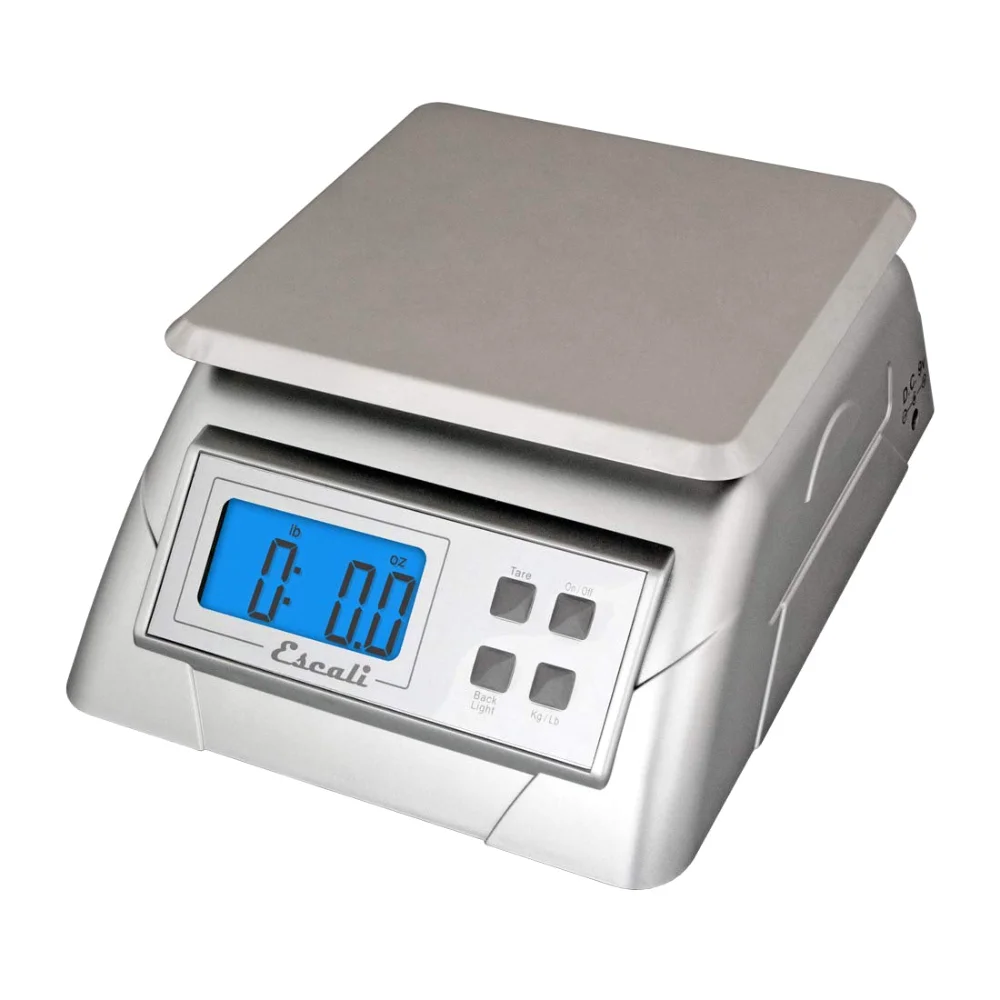
Precision & herb scales
4.2 · 214 ratings
06On the counter
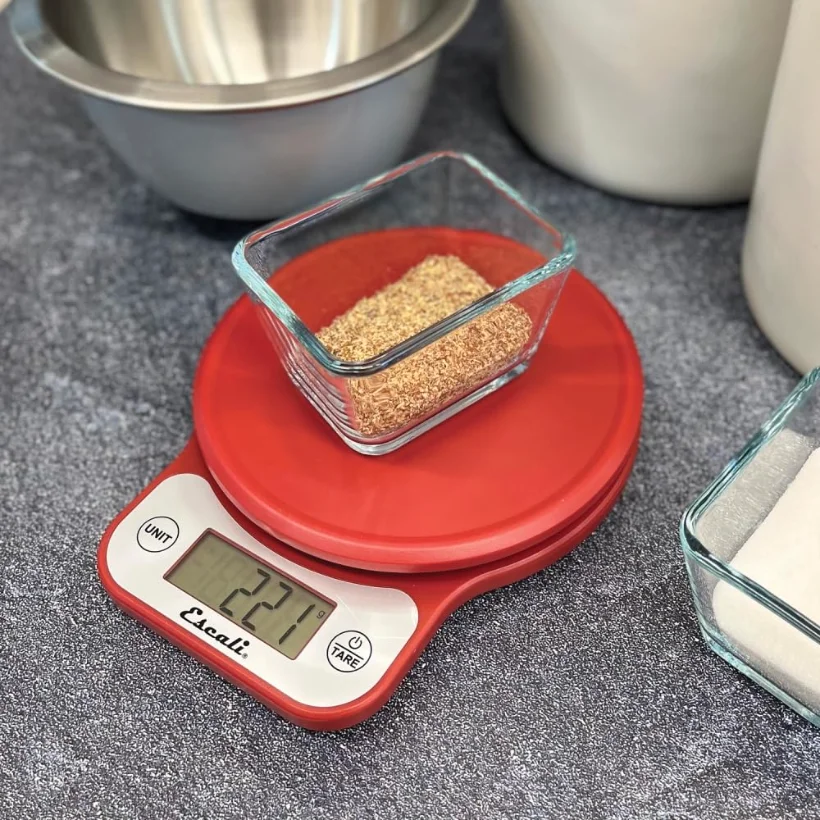
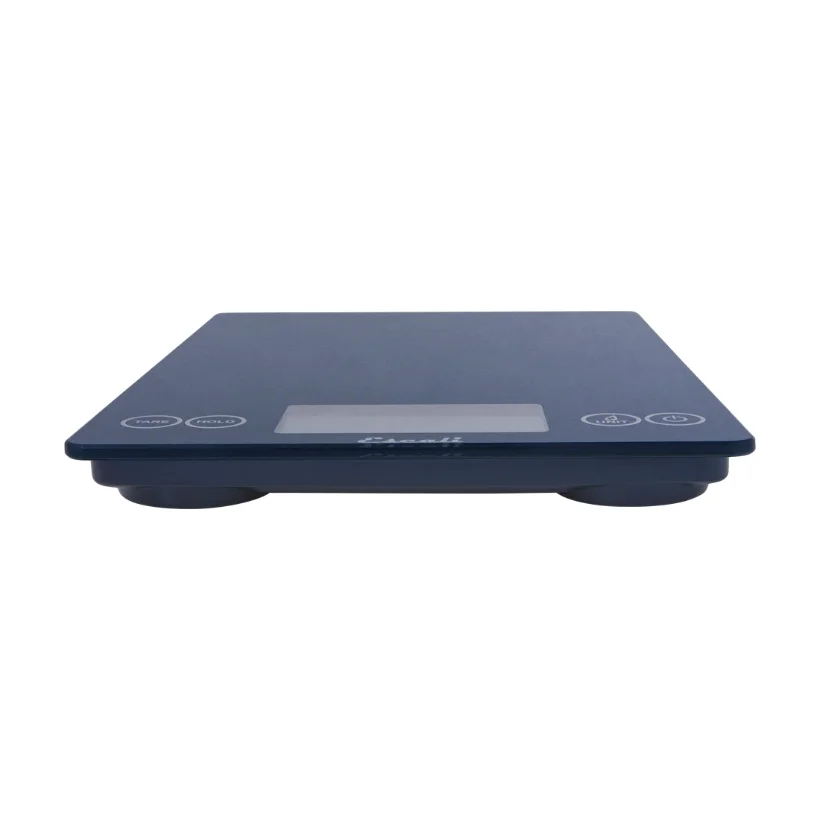
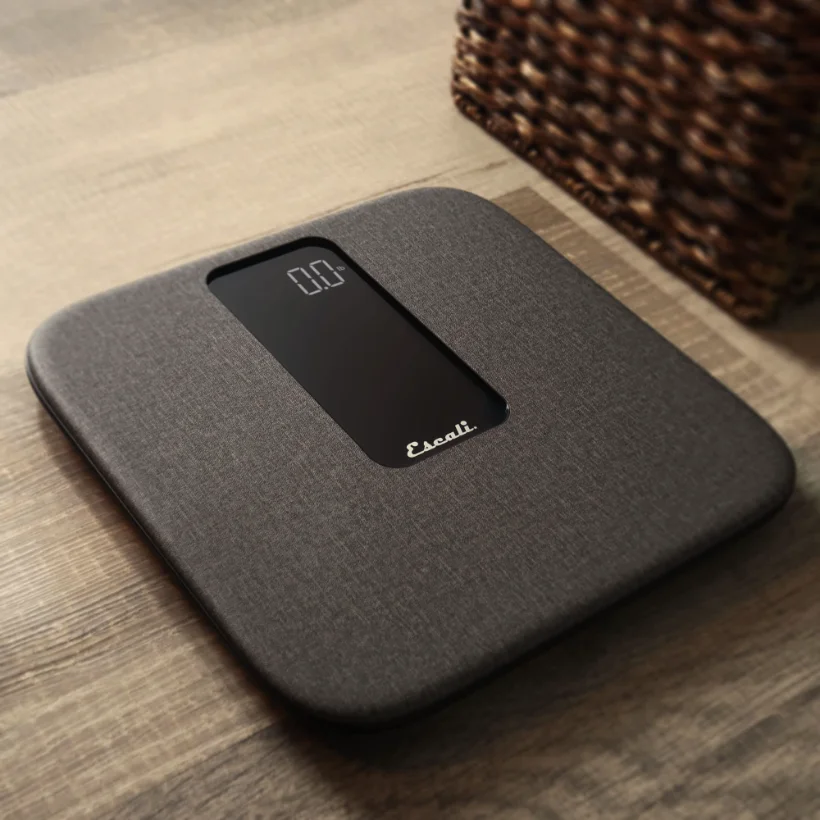
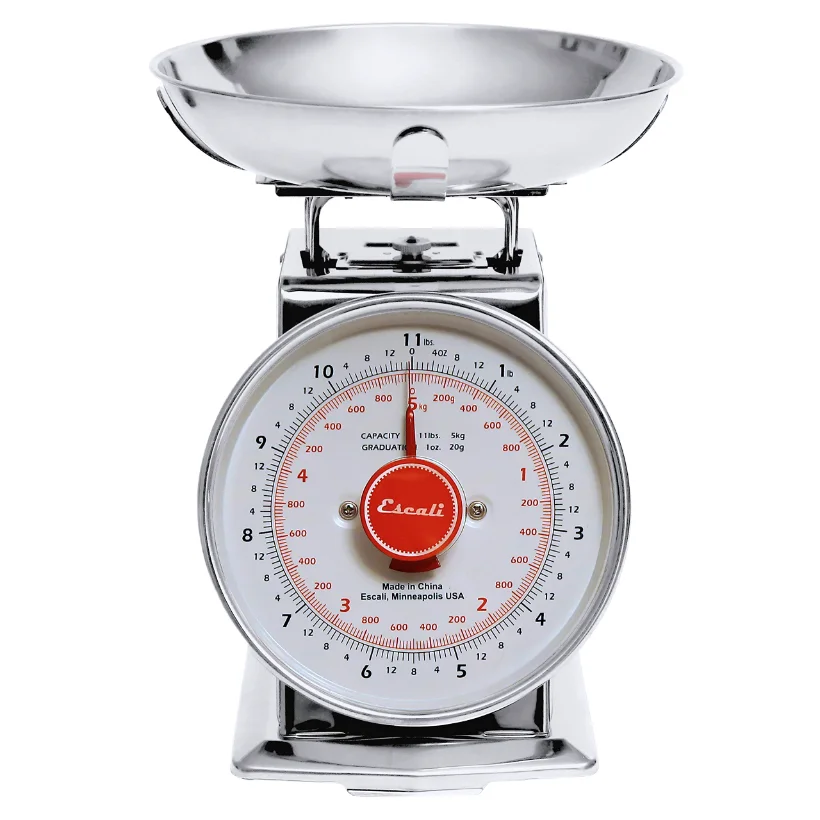
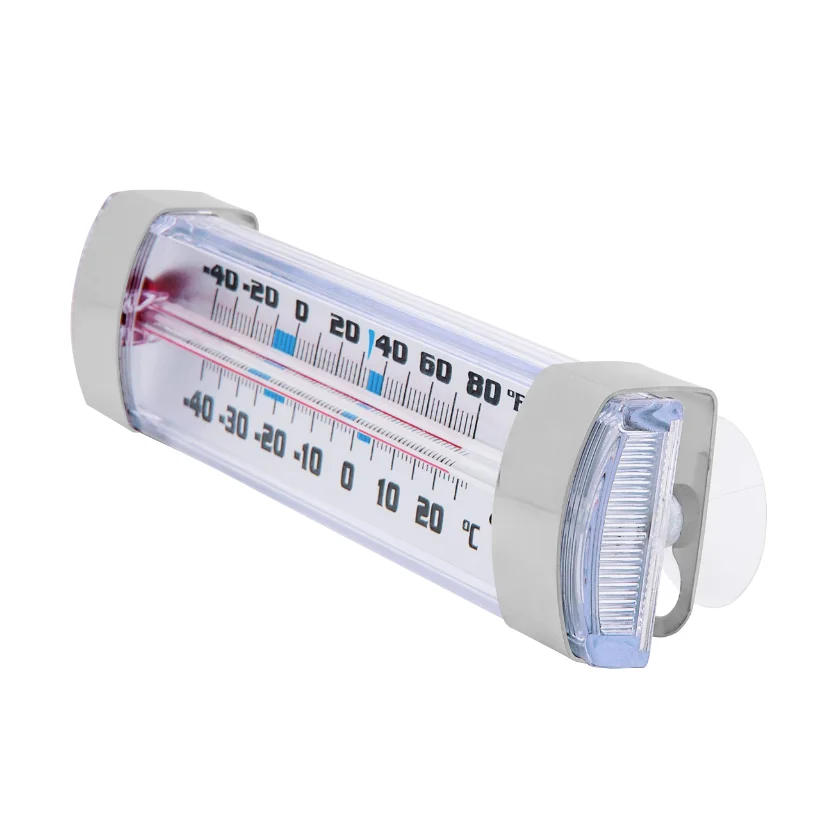
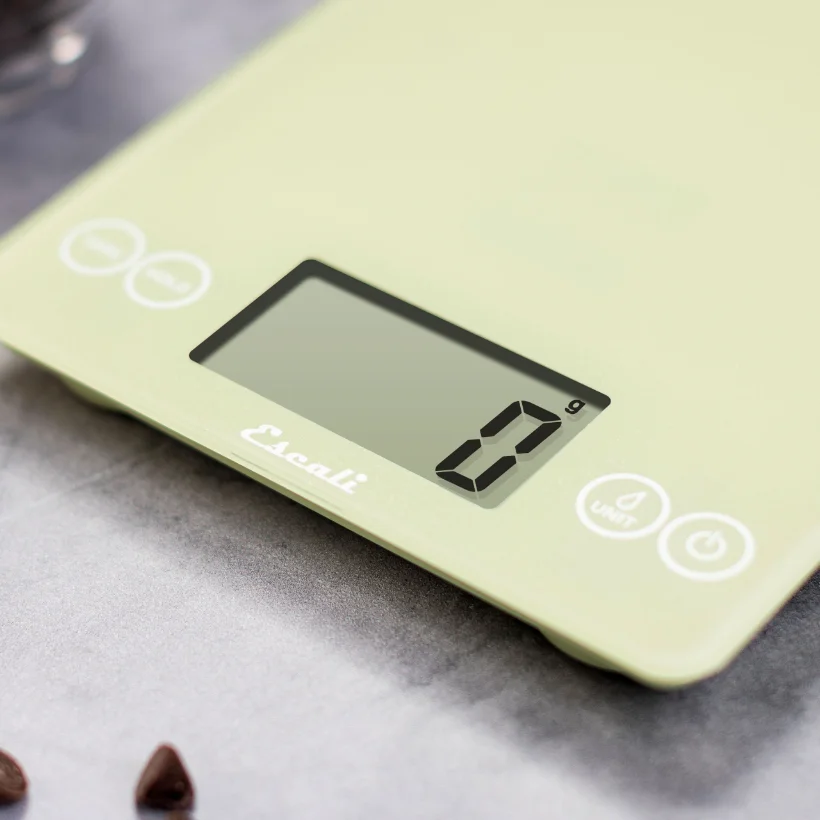
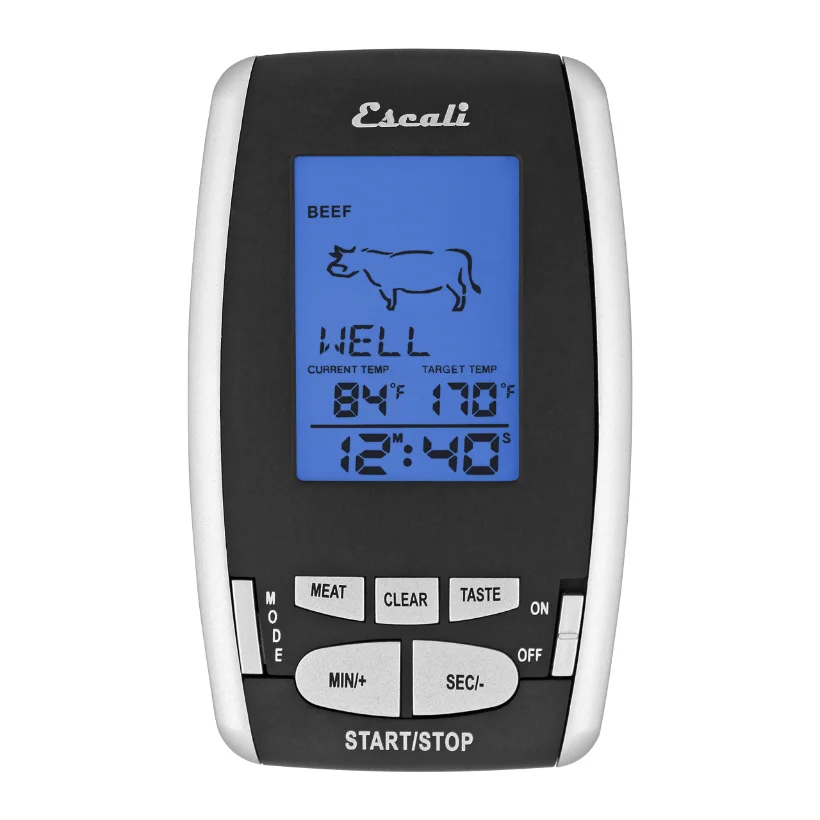
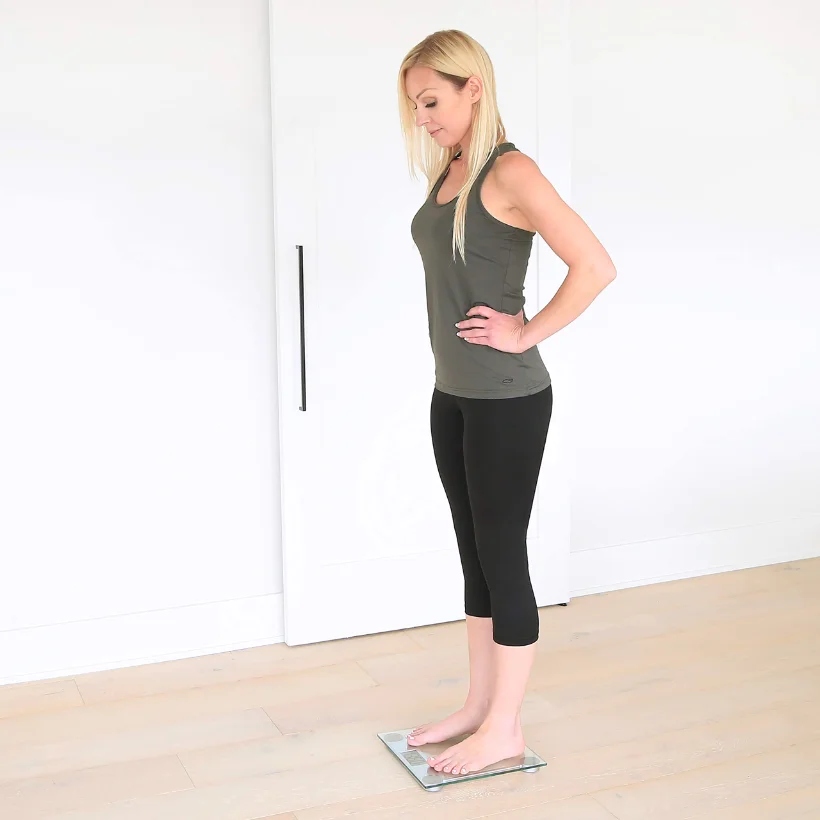
A dusting of flour, a pot of oil at 350, a fridge shelf at 38 degrees. These are Escali pieces as they are sold, photographed at the jobs they were built for.
07How each one measures
Almost every disappointing kitchen instrument is a good mechanism asked the wrong question. A dial thermometer left in a steak on the grill is doing its job; the same dial asked for a two-second espresso-scale reading is the wrong tool twice over. The range uses five mechanisms, and the table below is the shortest honest guide to which belongs where.
The digital scales, kitchen and bathroom both. A sensor under the platform turns weight into a figure, tares to zero around any bowl, and switches grams to ounces on a press. Capacity and resolution are the two figures that matter, and both are on every card.
A spring and a needle, no battery anywhere. The Mercado reads to its 11-pound ceiling the day the batteries in everything else are dead. It trades fine resolution for the ability to never be off.
A stainless probe that moves a needle, oven-safe and dishwasher-tolerant. Slower than digital and honest about it: this is the thermometer that stays IN the roast with the door shut, not the one you flick in and out.
Thermistor and thermocouple probes with a screen, reading in seconds. The instant-read half of the shelf: into the thickest part, past the bone, read, out. The Stelo folds and recharges; the wireless set reports from 200 feet away.
Reads a surface from a distance without touching it: a griddle, a pizza stone, a pan of oil. It sees only the surface, which is exactly why the two-in-one models carry a probe as well, for the inside of the food.
| Mechanism | Where it belongs | Reads in | Where it fails |
|---|---|---|---|
| Load-cell platform | Baking, portions, meal prep, body weight | Under two seconds | Above its rated capacity: the ceiling is on the card |
| Mechanical dial | Market stalls, camp kitchens, battery-free households | At a glance | Half-gram work: the needle is honest but coarse |
| Dial thermometer | Inside a roast, an oven, a fridge shelf | One to two minutes | Quick checks: it is built to stay put, not to dart |
| Digital probe | Instant reads, frying, candy stages, grill checks | Two to four seconds | Left inside a closed oven, unless the probe is rated for it |
| Infrared | Griddles, stones, pans, surfaces you cannot touch | Instantly | The inside of anything: it only ever sees the surface |
Nothing in the Escali way is asked to answer two questions at once, which is why the mechanism sits on the card next to the price.
08Heat, answered in seconds
The dials stay with the food and the probes visit it. Both halves of the shelf are here, with the probe length and the degree range printed where you can read them.
Analog dial thermometers
4.3 · 5,874 ratings
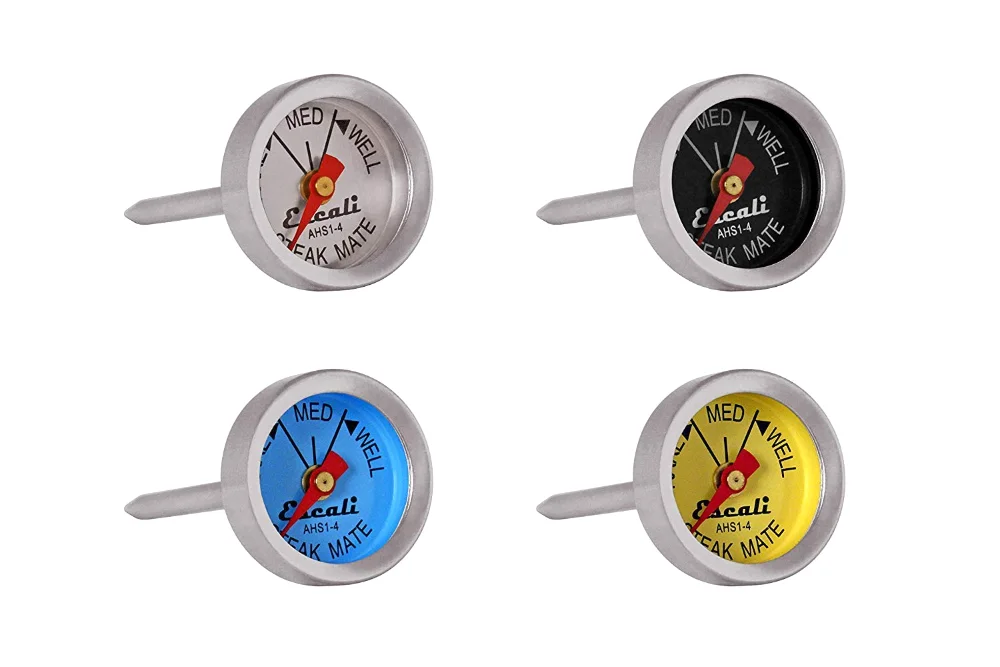
Wireless, infrared & sets
4.2 · 1,409 ratings
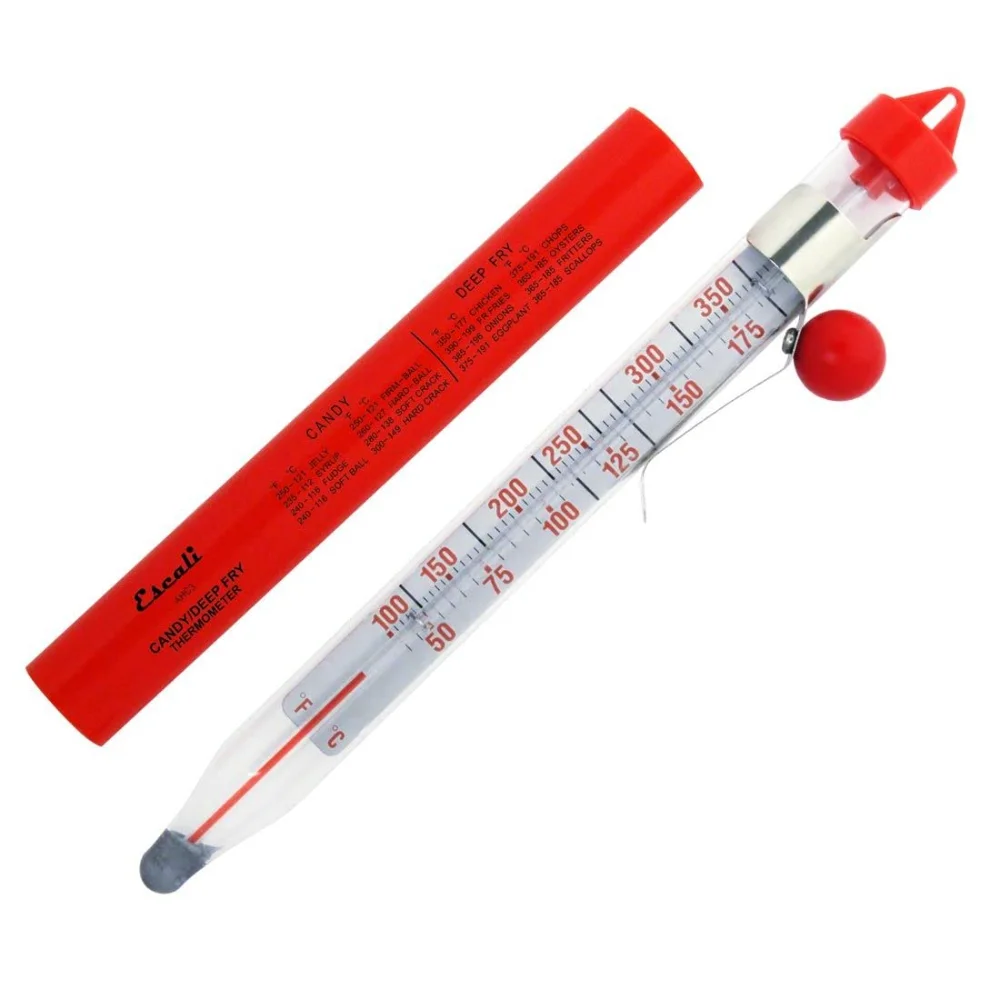
Candy & deep-fry thermometers
4.4 · 869 ratings
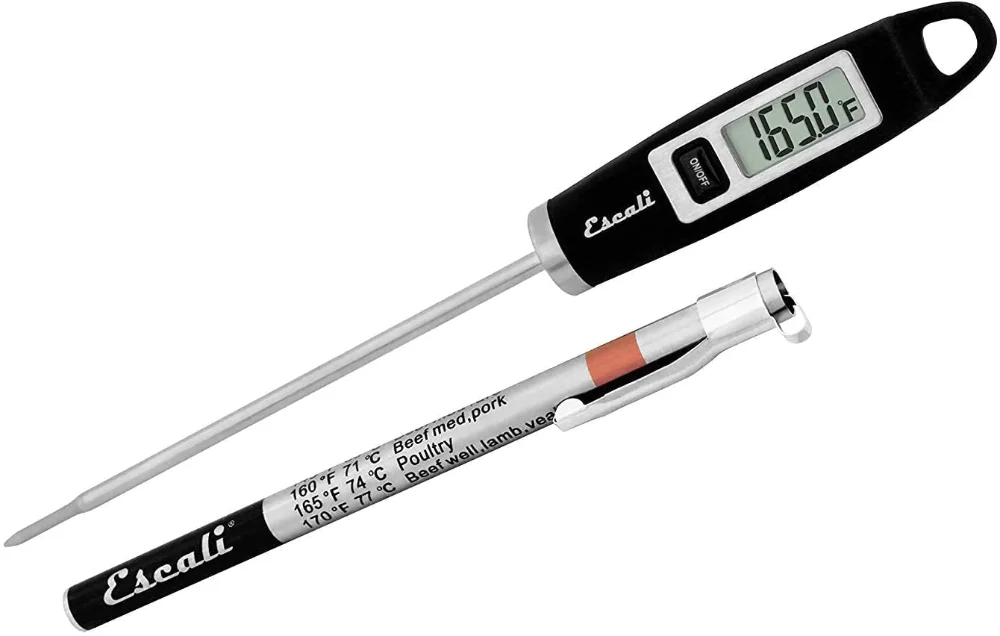
Digital probe thermometers
4.3 · 628 ratings
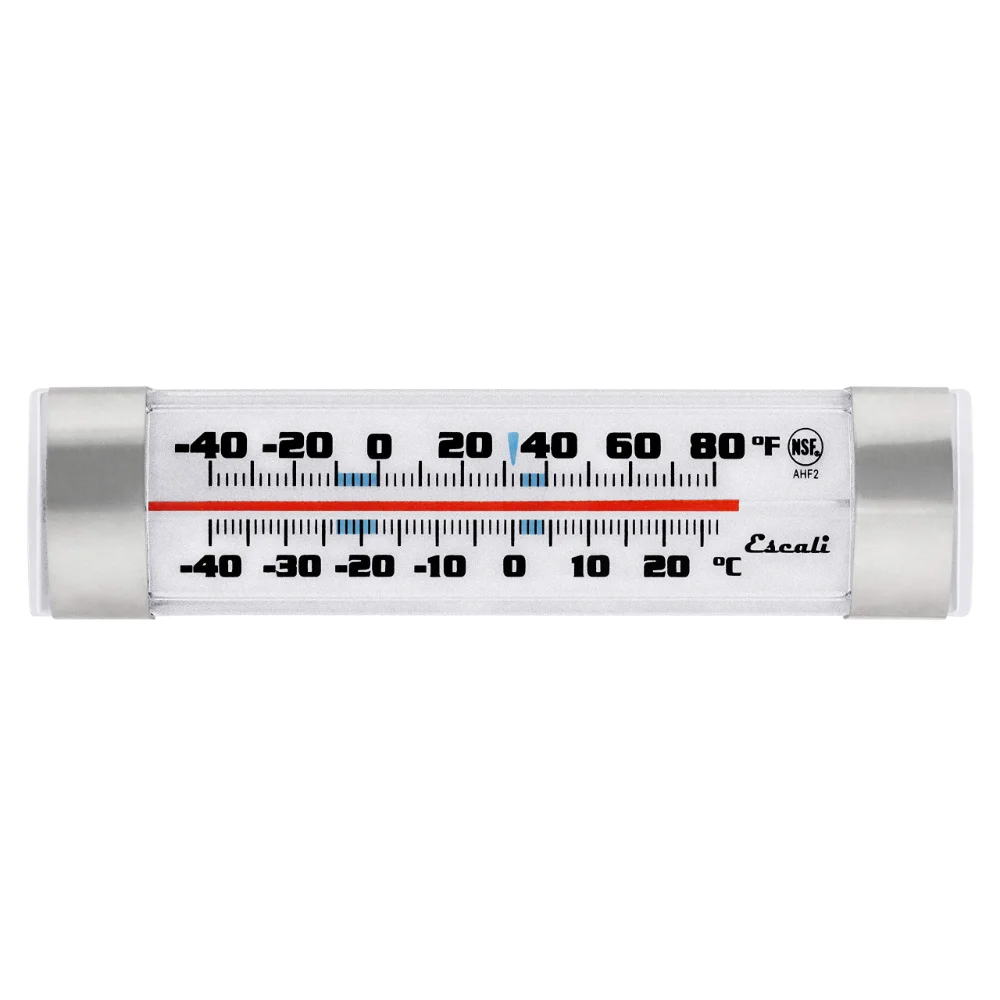
Fridge & freezer thermometers
4.4 · 586 ratings
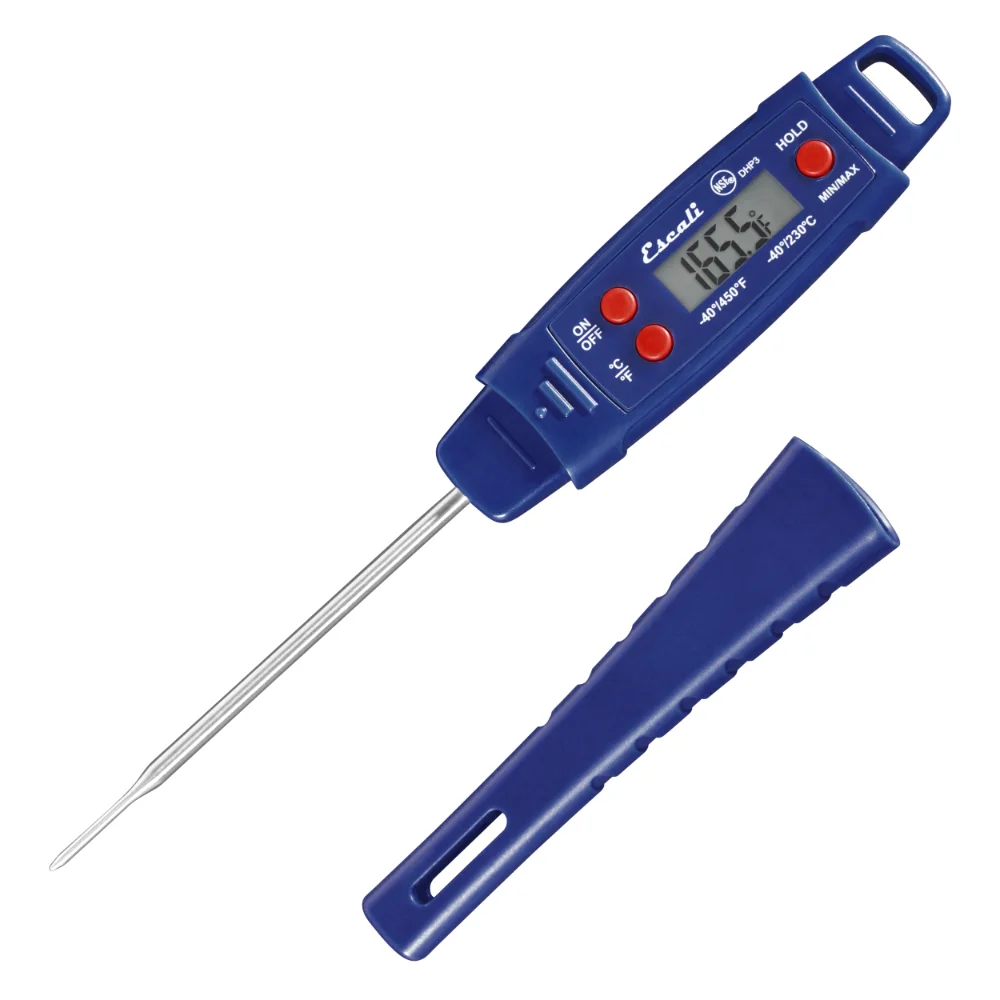
Digital probe thermometers
4.2 · 357 ratings
09Against the alternatives
Every kitchen already measures somehow. Here are the five common answers side by side, including the ones that cost nothing, and an honest note on where each one gives out.
| The method | What it does well | What it costs you | Honest verdict |
|---|---|---|---|
| Cups and spoons | Free, fast, in every drawer already | A cup of flour changes weight with the scoop and the settling; recipes drift batch to batch | Fine for soup, expensive for bread |
| Cooking by the clock | No equipment at all; works when thickness never varies | Ovens run hot or cold and a thick chop ignores the recipe writer’s clock | A schedule, not a measurement |
| Judging by colour | Feels like experience; sometimes is | The federal food-safety service reports one in four hamburgers that look done are not | The look proves nothing; the number does |
| The phone | A timer is always in your pocket | Wet flour hands on a touchscreen, and the recipe leaves the screen every time it rings | Fine until you cook two things at once |
| A dedicated instrument | One number, straight, repeatable; tares, alarms and events built for a stove | It is a purchase, and it wants a drawer of its own | What the recipe meant all along |
The last row is where the Escali catalog lives, and the first two are worth understanding before you spend anything at all.
10Minutes, body weight and the pro bench
The same discipline runs through the whole Escali catalog: a four-event timer on the fridge door, a 400-pound platform on the bathroom tile, a lab balance reading to a hundredth of a gram.
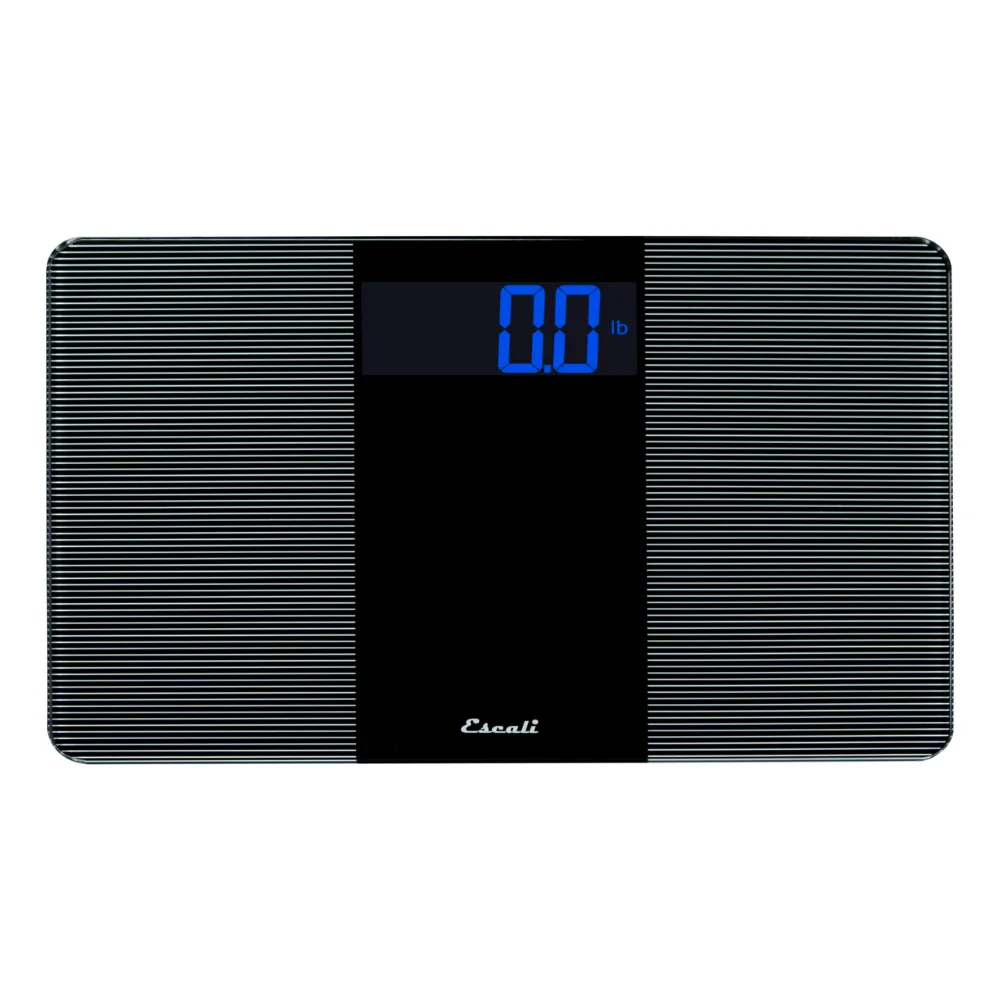
High capacity & wide platform
4 · 766 ratings
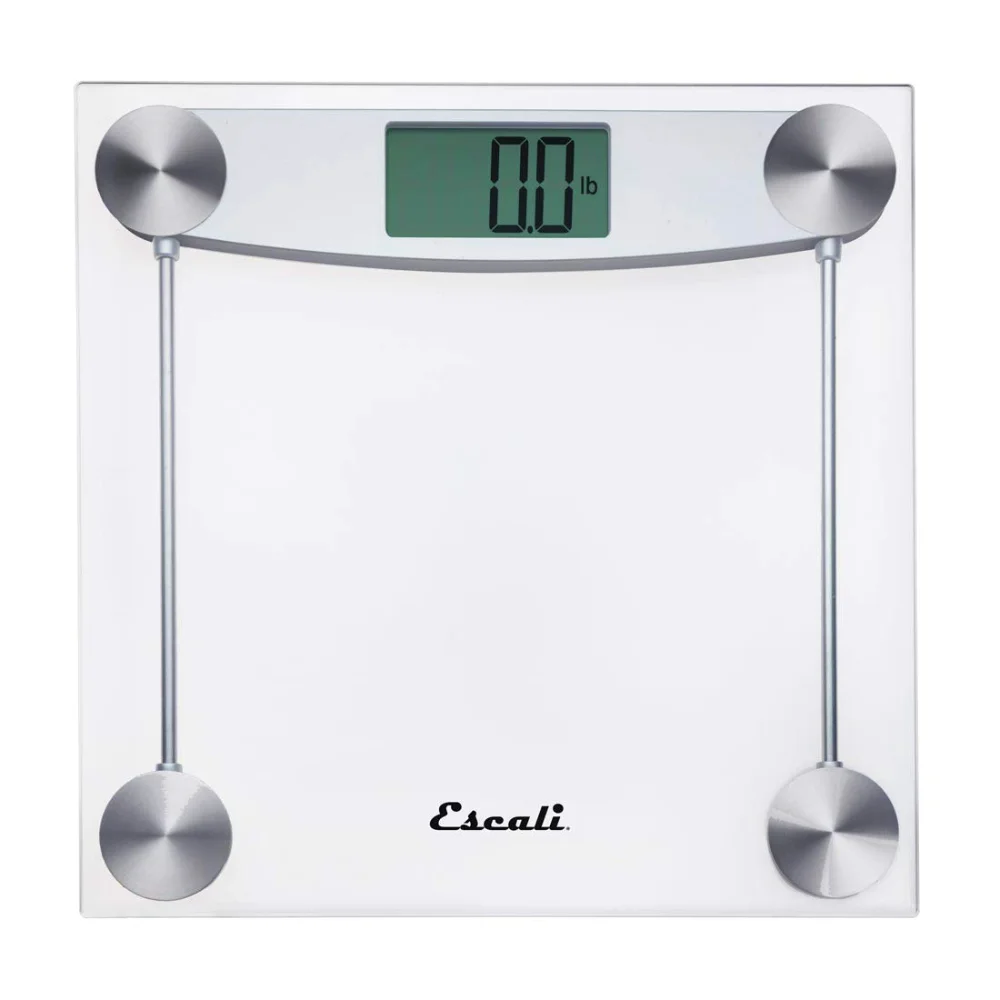
Glass bathroom scales
4.3 · 539 ratings
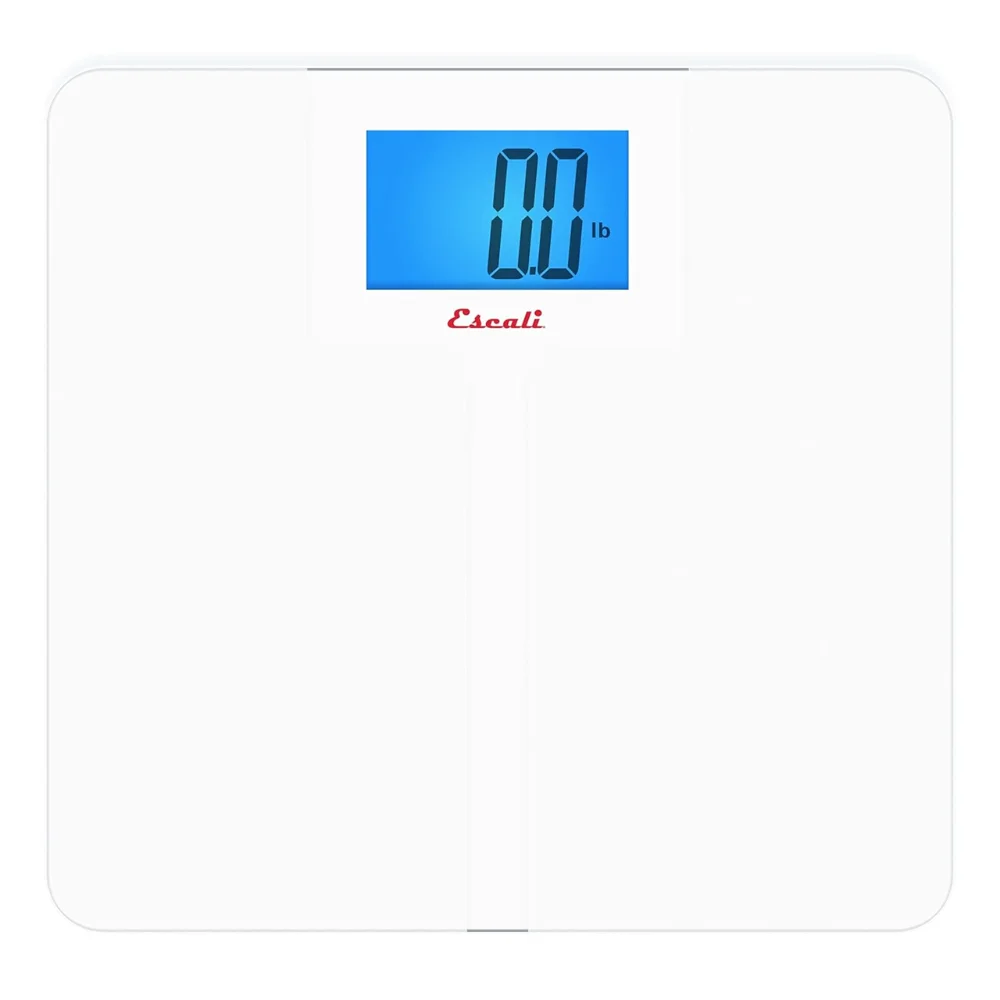
High capacity & wide platform
4.5 · 317 ratings
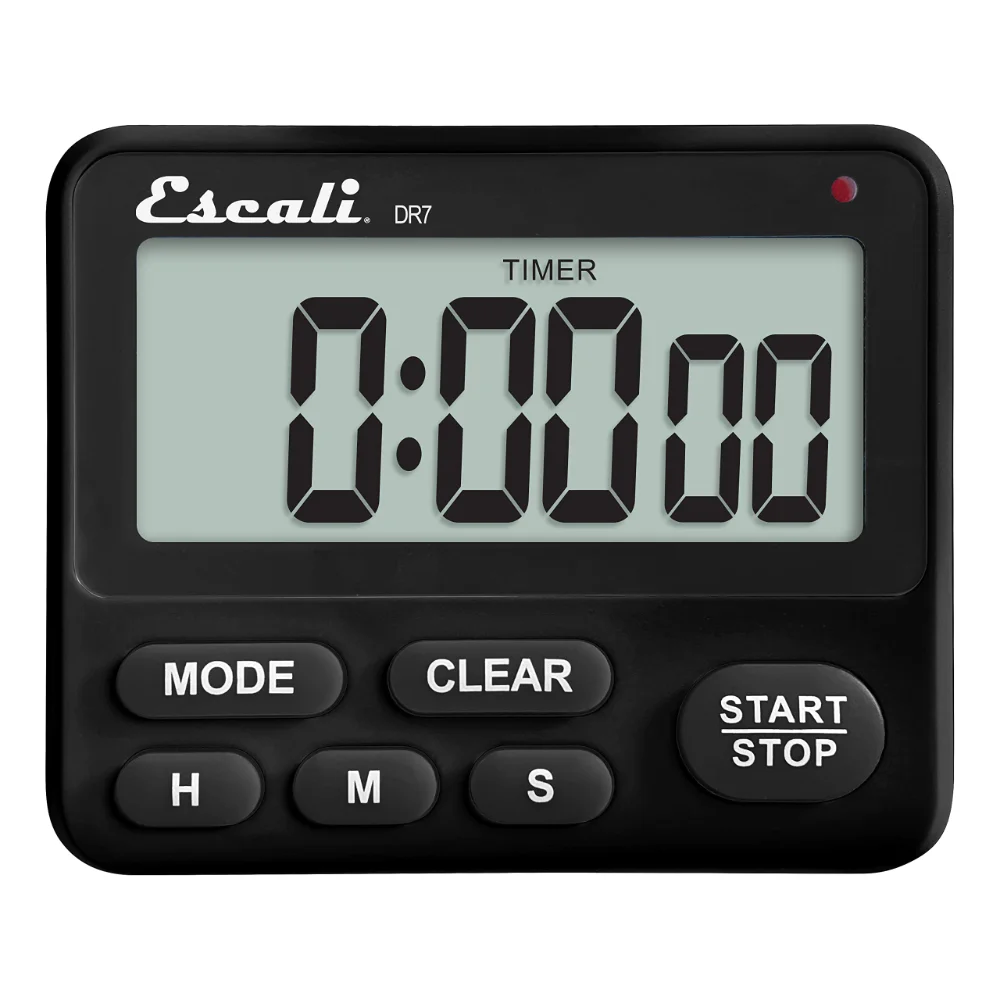
Kitchen timers
3.9 · 187 ratings
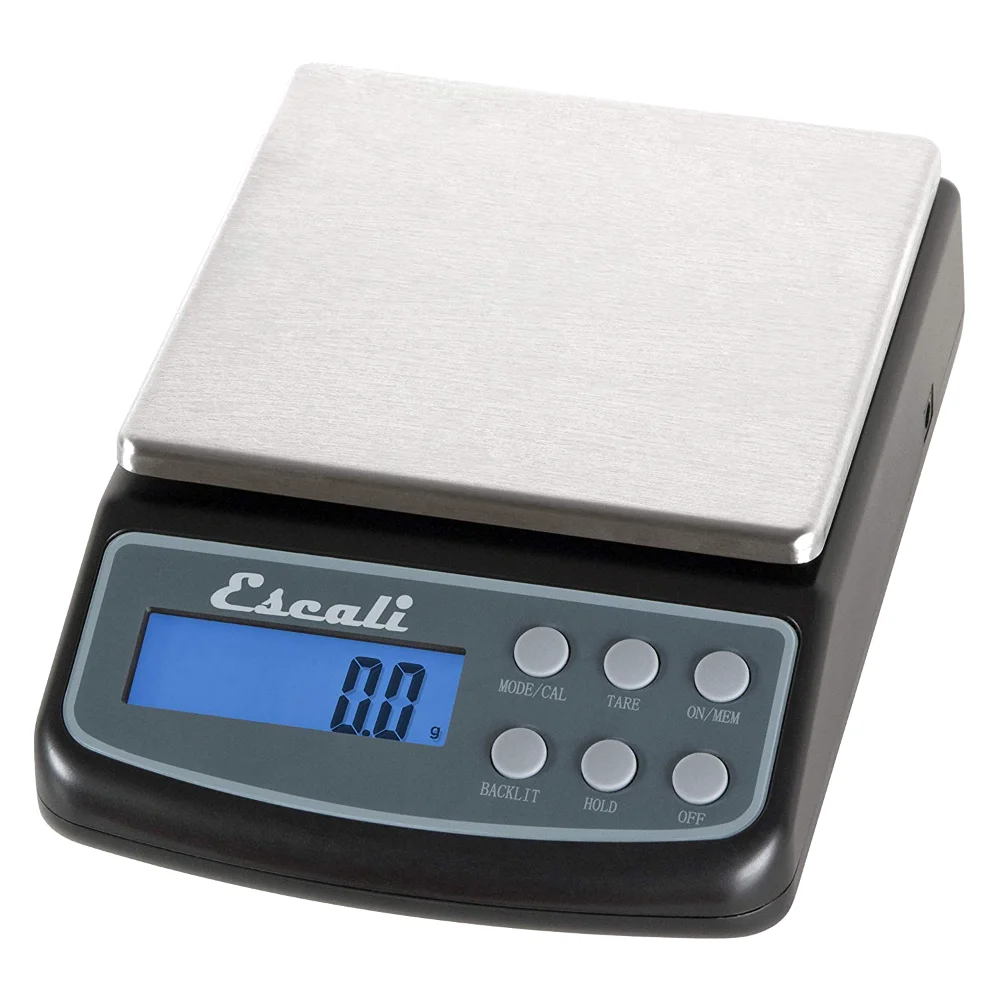
Lab balances
3.8 · 113 ratings
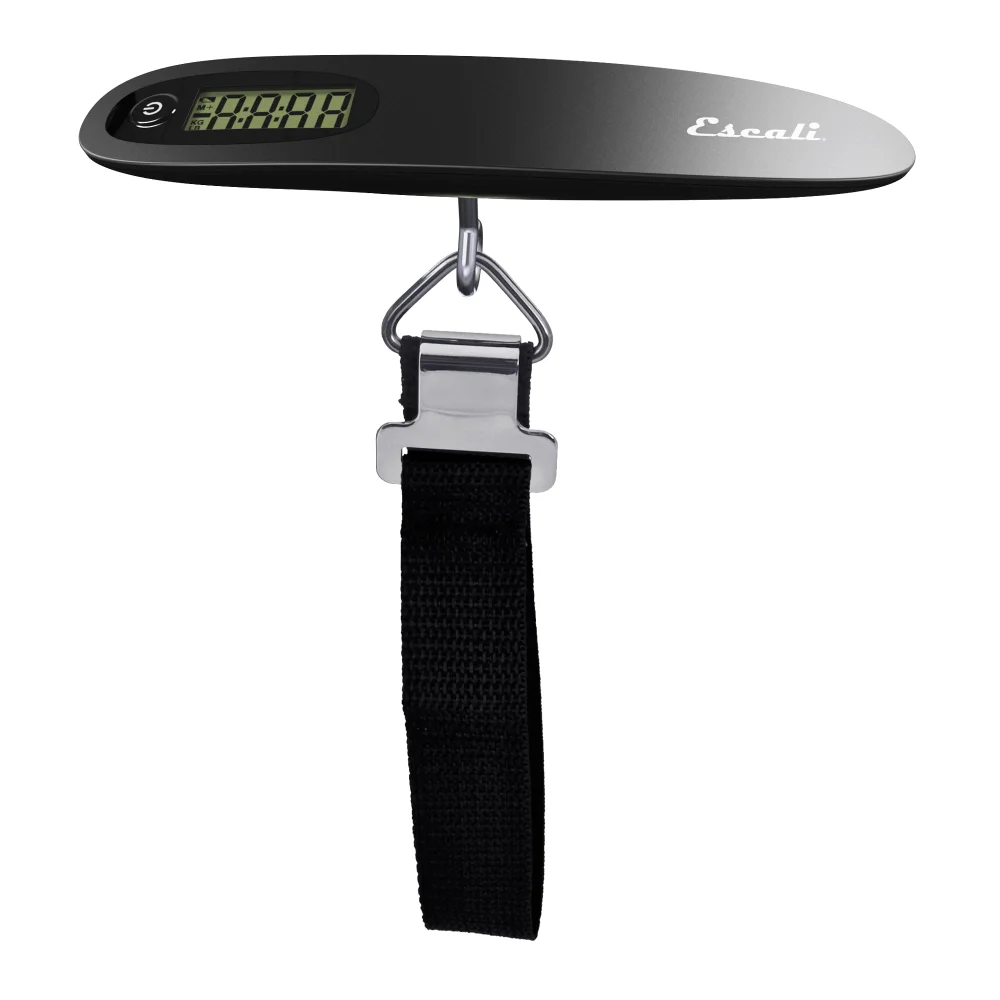
Travel & luggage scales
4.5 · 101 ratings
11By the name people type
Three pages, each one a single line of the catalog laid out by colour and price. If you already know the thing you want from Escali, start here rather than at a shelf.
The scale the catalog grew out of: one load cell, one button, eight colours, and a stainless tray sold separately for the people who weigh meat on it. If you own one Escali, it is probably this one.
All 9, by colour and price →A sealed glass sheet over a load cell: flour wipes off the top, and nothing works its way into a seam. Nine platforms from the 15-pound Arti in seven finishes to the 22-pound ArtiXL.
All 9, by colour and price →Fourteen digital probes between nine dollars and seventy: gourmet probes in three colours, a waterproof four-second read, folding compacts, long stems for frying, and a rechargeable thermocouple. The number goes in past the bone and comes back in seconds.
All 14, by colour and price →12Before you pick one
Almost every instrument that disappoints was the wrong specification, not the wrong brand. Six checks settle all of it, and every figure you need is printed on the cards here.
Capacity has to carry the container plus the food. Put your usual mixing bowl or dutch oven on any bathroom scale: if the bowl alone passes five pounds, the 11-pound platforms are tighter than they look and the 22-pound ArtiXL stops being a luxury.
Bread, dinners and portions live happily at one-gram increments, and every kitchen platform here reads them. Pigments, precious metals and anything sold by the carat want the lab balances on the pro bench, where the increments drop to a tenth and a hundredth of a gram. The card tells you which you are looking at.
A candy thermometer clipped to a deep stockpot wants the 12-inch probe; a saucepan is fine at 5. For a roast, the probe has to reach the thickest part without the display touching the oven wall. The probe length is on every thermometer card.
One pot, any timer. A holiday stove wants the four-event model: four counts, four alarms, one magnet. Count the burners you actually use on a busy day and buy that many events.
Every platform here carries at least 400 pounds; one carries 562. A scale that tops out below the person weighing reads nothing at all, so check the ceiling first and the finish second.
If a reading feeds a recipe you sell, a postage bill or a lab notebook, you need the resolution figure and a way to verify it: a lab balance reading to 0.01 gram, and the calibration weight that proves it is still telling the truth.
13Standards, and what they cover
A measurement is only as good as the authority behind the target, and none of the targets on this site are ours. Here is who stands behind what, Escali included.
The targets every cooking page here prints -- 165F for all poultry, 160F for ground meats, 145F with a three-minute rest for whole cuts, 145F for fish -- come from the federal safe minimum internal temperature chart. A thermometer answers the question; the chart decides what a passing answer is.
US Department of Agriculture, Food Safety and Inspection Service, read August 30, 2026The federal food-safety service runs a national campaign on exactly this: appearance and colour are not reliable indicators of doneness, even a hamburger that looks fully cooked is one time in four not, and the probe goes into the thickest part, away from bone, fat and gristle.
US Department of Agriculture, Food Safety and Inspection Service, read August 30, 2026The refrigerator belongs at or below 40F and the freezer at 0F, and since few refrigerator controls show an actual temperature, the federal advice is a freestanding appliance thermometer in each. That advice is the entire reason the fridge and freezer line on our thermometer shelf exists.
US Food and Drug Administration, read August 30, 2026Capacity, resolution, probe length, degree range and pack count, read out of our own product data. Where a card carries a certification, it is there because the certification is in the product’s own name, and you can hold every one of these figures against the box that arrives.
14In their words
Real reviews of these instruments from people who have lived with one. The useful ones are rarely enthusiastic; they are the ones that tell you what the scale still does in year six.
★★★★★
Five years of daily use
I purchased this Escali digital food scale in 2015 and after 5 years of almost daily use, the scale would no longer display the weight in ounces, only Kg would display. I contacted the manufacturer directly and explained the problem. They immediately told me they would be sending me a new replacement scale. I received the new replacement in less than a week and no cost to me. The scale is working excellent as of Dec. 2025 and I am very pleased with the scale and the customer service of Escali.
★★★★☆
Twenty years of bread
When I first started baking all my own bread 20 years ago this was the first scale I got, based on recommendations from books and 20 years later it’s still highly rated and, if I’m remembering correctly, it costs about what I paid for it 20 years ago. I just bought another one of these scales after using other scales for the last 15 years or so because I needed a small scale to slide into the cabinet near my stove for weighing out ingredients for meals my husband and I make for the two of us.
★★★★★
The second reading is the right one
It also has more reliable weight readings compared to the one I had before that would give you 3 different weights if you stepped on it 3 times. This one does require you to step on twice. The first reading will always be about 5 pounds high. Then the 2nd is right and if you step on more times, it is always the 2nd weight. Unfortunately, after 4 months, when I stepped on it the first time one morning, the weight was 300+ pounds, then ERR, then random numbers. I checked the batteries (still fully charged), took them out and put them back in. Then, just random results, never an accurate weight.
★★★★★
Checked against lab weights
First thing I did upon unboxing is check the accuracy against a set of perfectly calibrated reference weights that I have from a lab at work. The Escali Arti is dead-on accurate... to the gram... from 50gm all the way up to 5,000 grams. Even moving the weights well off-center didn’t upset the Arti. Tares perfectly.
★★★★★
Stored in a drawer
Absolutely love this scale! Beautiful. Easy to put away in a drawer. Nice how it can stay closed for small things or open up for wider bowls. Very easy to use. Tare function works beautifully, by the way (read in one review it didn’t have a tare, but it does).
★★★★★
A busy line kitchen
I use this every day. I work in a busy kitchen where it is necessary to temp constantly. Though it is just a bit long and sticks up worn in my chef coat sleeve, the utility of the length is great. It will reach to the back of the oven, bottom of the pot or probe the large protein cuts with ease.
★★★★★
Caramel and deep-frying
I love the hands-free stainless steel pot clip because it stays steady on the side of my heavy Dutch oven, and the heat-resistant wooden knob means I can adjust it without burning myself. Having the reference temperature zones printed right on the back of the column and the protective sheath saves me from looking up candy stages every five minutes.
★★★★★
A camping cooler
This clipped nicely onto a center divider in the cooler (and could be unclipped and buried below the icepacks near anything I wanted to monitor more closely) and gave me the feedback that I was looking for. Before taking it out on an actual camping trip I tried a few tests at home where I compared the readings of other thermometers including an IR model, and this one seemed to track decently with the rest.
★★★★★
A mechanical holdout
It’s accuracy has been checked and ... close enough for kitchen work! It’s beautiful and easy to clean up. It has a slightly higher capacity then many so pulls more weight around the kitchen (I know, ... that’s bad. Suck it up buttercup!) Recommended Strongly for those wanting a mechanical scale.
on Escali Mercado DS115B Mechanical Dial Scale, 11 lb, Stainless
15About the brand
Everything here replaces a guess with a reading: how much, how hot, how long, and the interesting part of each instrument is the sensor you never see.
Founded in 1999, 27 years of putting numbers where guesses used to be, in 85 instruments across five shelves. The kitchen scale came first and did not stay the whole of it: the same load-cell discipline now stands on the bathroom tile and tightens to a hundredth of a gram on the lab bench.
16Before you order
Accuracy, capacity, which thermometer suits which pot, and where an Escali order is actually placed.
Every card on this site carries a buying button, and every page has one at the bottom. The button opens the current price at our retail partner in a new tab; payment, delivery and returns happen there rather than on this site.
If you know what you want, the button in the header opens the whole range at once. If you do not, the five shelves above narrow it down by the question you are asking: weight, heat, minutes, body weight, or the pro bench.
The figure to look for on each card is the resolution: the everyday platforms read to a whole gram, and the precision platforms to a tenth. A whole gram is tight enough for bread and dinners; a tenth is for yeast, salt and espresso, where the whole recipe can fit inside two grams. What keeps either figure honest at home is habit: a hard level surface, and tare pressed before the first ingredient.
A digital probe for checking, a dial for staying put. If you flick a thermometer in and out of a chop, you want the instant-read shelf, where a probe answers in seconds. If you leave one in a roast with the oven shut, that is what the oven-safe dials are for, and asking one kind to do the other job is where most thermometer disappointment comes from.
Every digital platform here reads both, on a button press, and the tare works the same in either unit. The one instrument that will not switch is the mechanical dial, which reads what its face was printed to read and never needs a battery for it.
Most platforms run on ordinary replaceable cells, the bathroom scales ship with theirs included, and the Stelo thermometer recharges instead. The honest battery advice for any kitchen instrument: the day the display dims, change the cell before you trust another reading, because a dying battery makes a scale drift before it makes it die.
Test it rather than guess: put something of known weight on the platform, a sealed bag of sugar or a calibration weight, and see whether the figure agrees. An instrument that reads a known weight correctly is fine at any age; one that drifts after a battery change and a level surface has earned its retirement.
17Worth reading first
Why a roast is measured and not admired, what a gram scale changes about bread, and what the cold side of the kitchen is supposed to read. The questions we get asked more than any others, answered with the arithmetic shown.
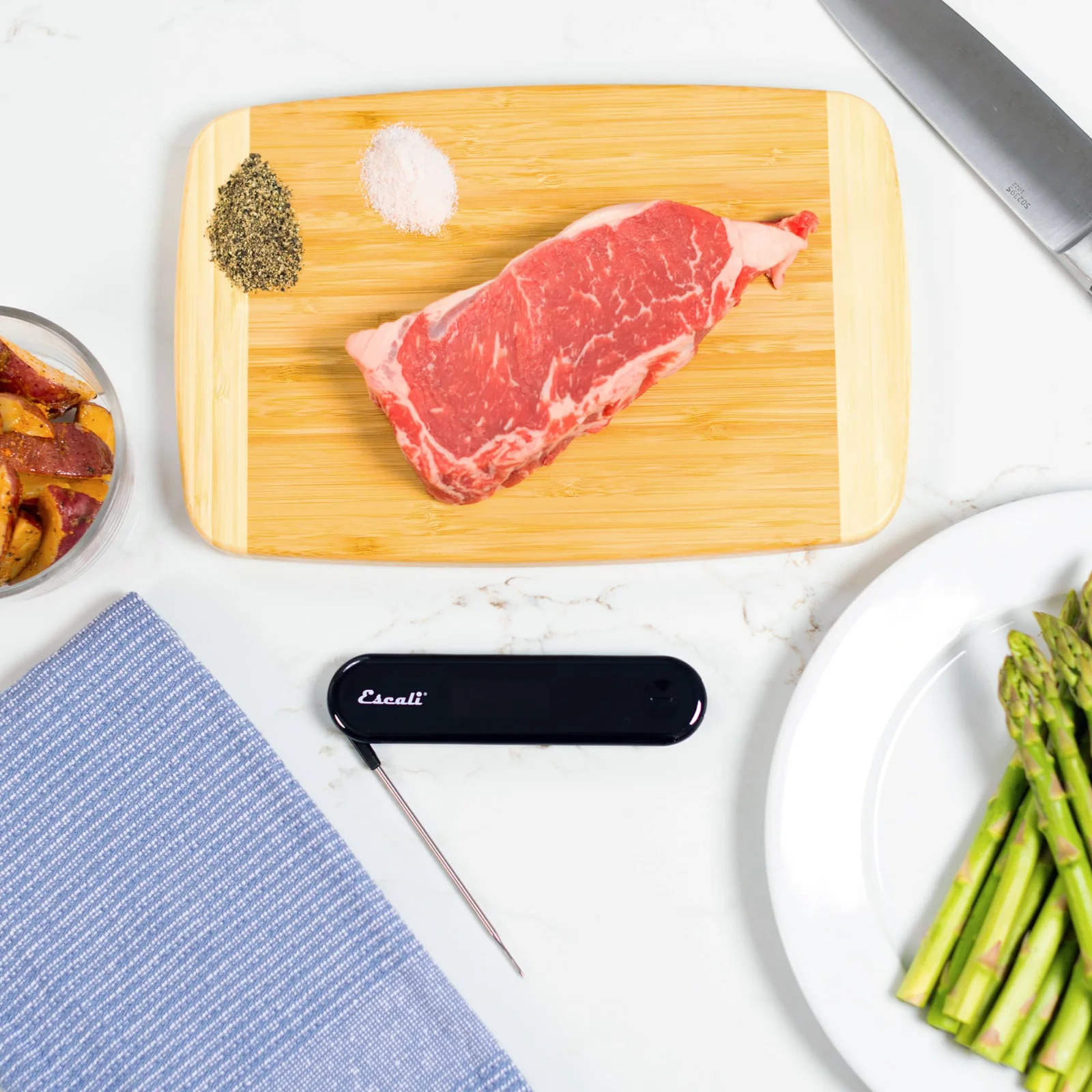
A hamburger that looks done is, one time in four, not. The federal chart is short, the probe placement rule is one sentence, and between them a roast stops being a gamble.
Read it →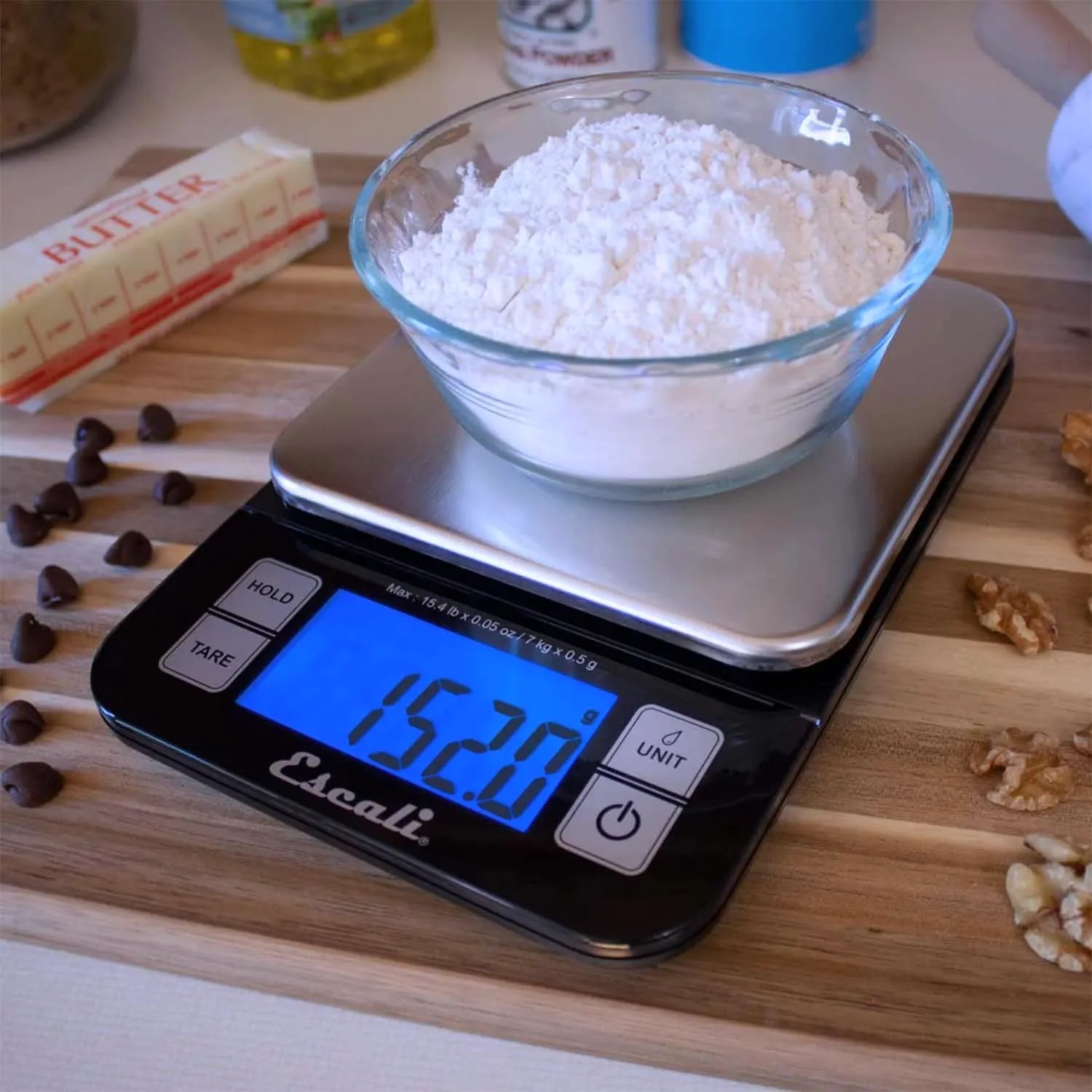
Two cooks following the same cup recipe are baking two different formulas, and neither of them knows it. A scale, one bowl and a tare button settle the argument for good.
Read it →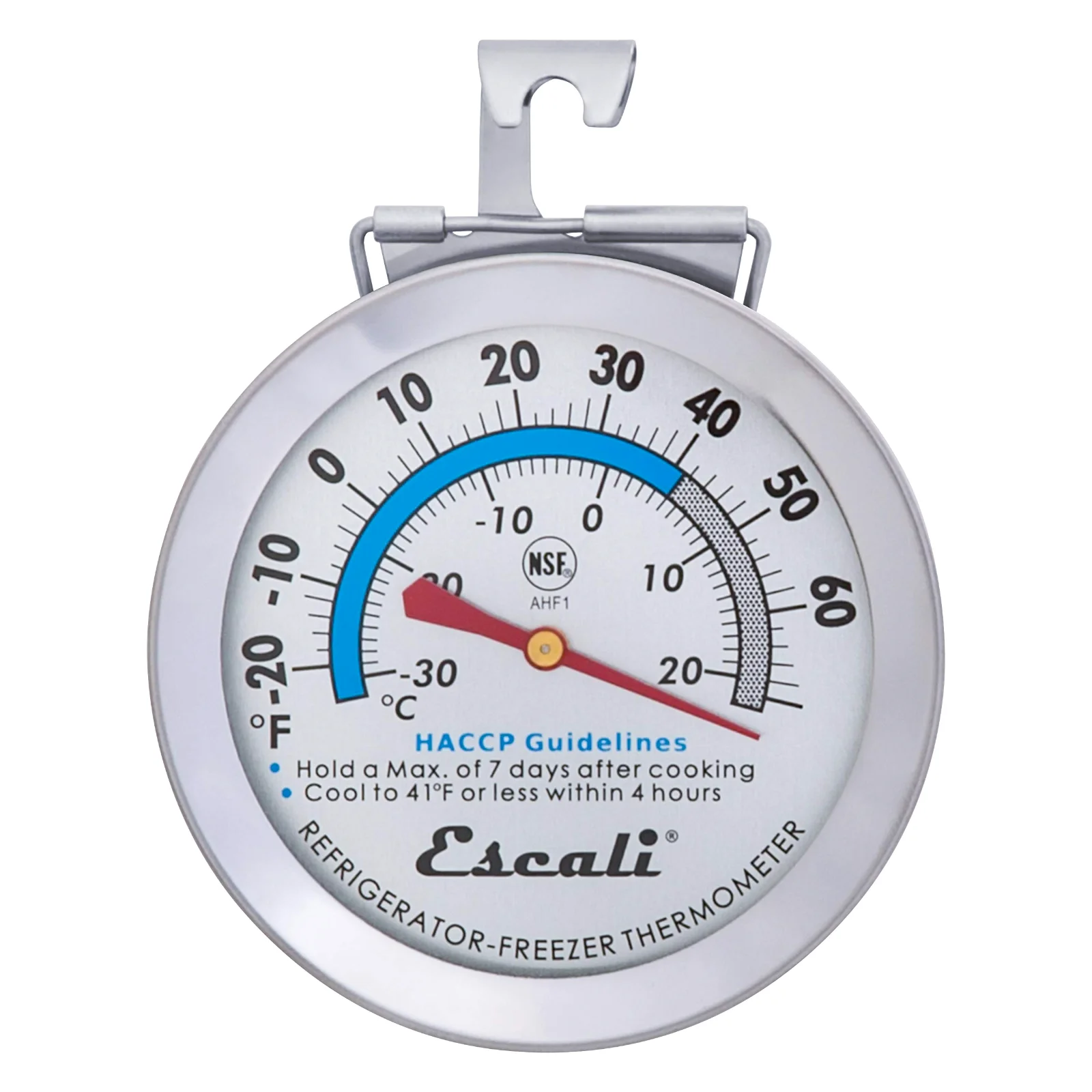
A fridge dial set to 4 is not a temperature. The federal figures are 40 and 0, few refrigerators show either, and a shelf thermometer is the whole fix.
Read it →One button, the whole Escali range
Every capacity, probe length and colour in the Escali catalog sits behind this button, with the current price beside it. Match the figure to your counter, and it ships from our retail partner.